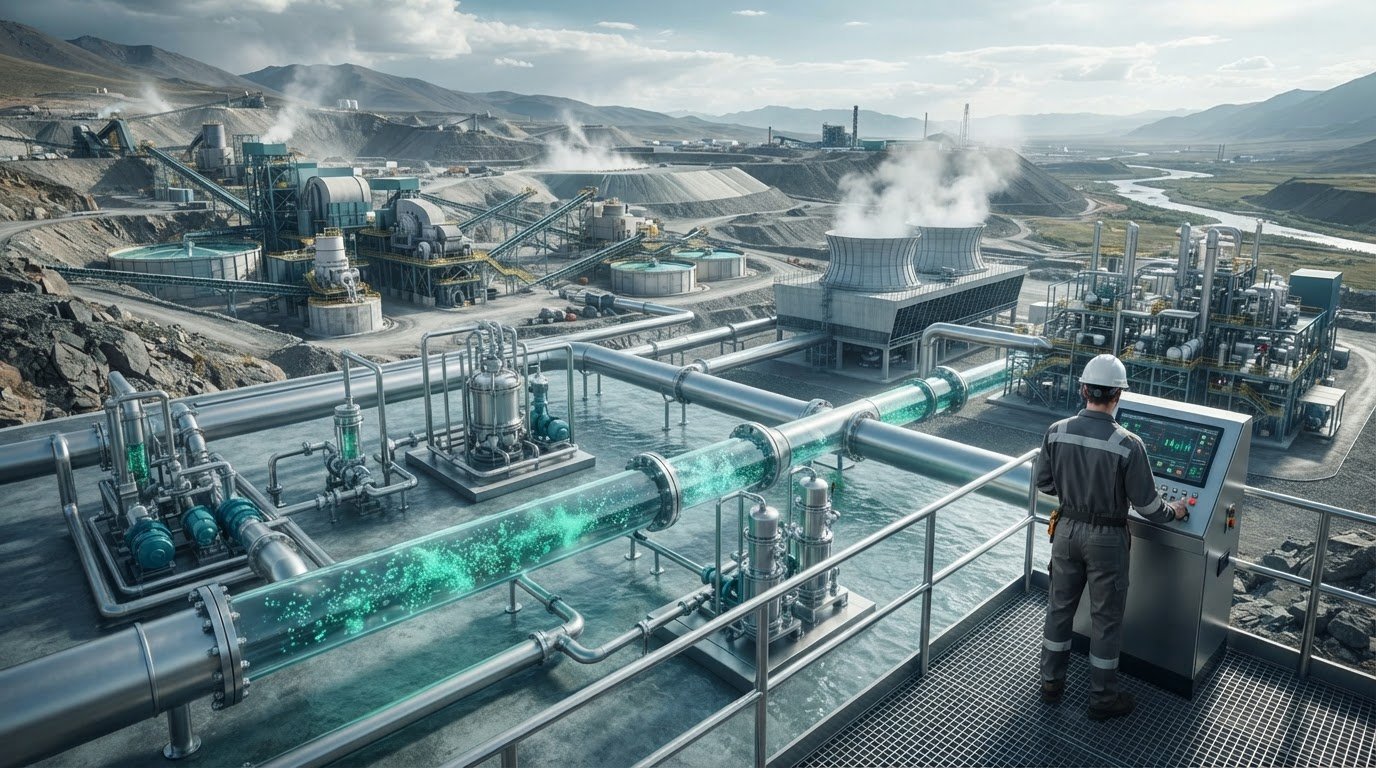


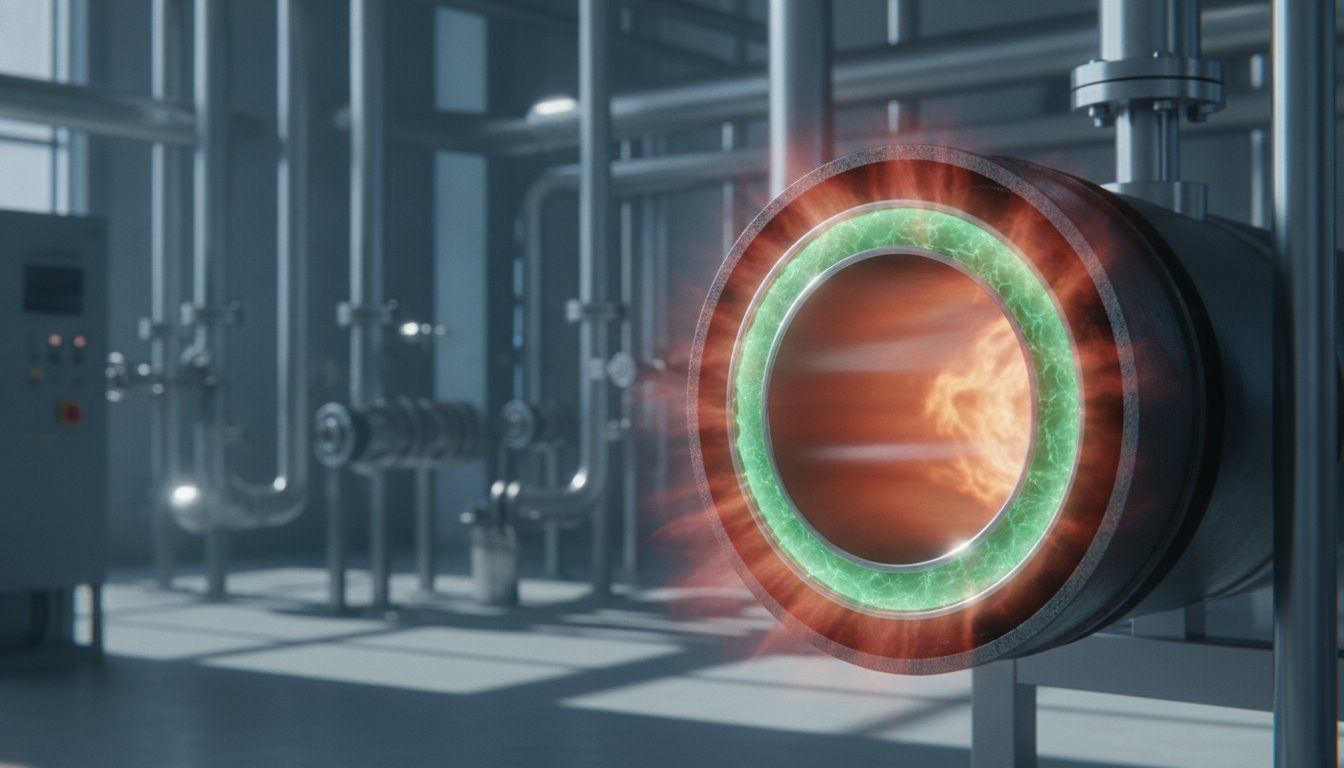
Thermal degradation is the silent thief of industrial efficiency. When process temperatures climb, standard chemical treatments often vanish, leaving your critical infrastructure vulnerable to rapid fouling and catastrophic flow restrictions. Selecting the right scale inhibitor for high-temperature applications isn't just a maintenance task; it's a strategic move to protect your global assets. You've likely seen expensive additives break down just when they're needed most, leading to unplanned downtime that erodes your bottom line.
It's a common struggle to balance extreme heat with chemical stability. We understand that constant equipment cleaning feels like a losing battle against physics. This guide provides the technical mastery you need to reverse that trend. You'll learn the specific selection criteria for molecules that maintain performance even at 500°F, such as advanced polycarboxylates and stabilized phosphonates. We'll explore how to extend equipment life and secure your process flow through precise chemical engineering and modern efficiency standards.
Key Takeaways
- Understand the fundamental role of extreme heat in accelerating mineral precipitation and the resulting risks to infrastructure security.
- Identify the specific molecular architecture required for a scale inhibitor for high-temperature applications to maintain threshold inhibition.
- Learn to quantify chemical performance by evaluating the half-life and hydrolysis resistance of antiscalants in circulating thermal systems.
- Master a strategic selection framework that balances feed water ionic strength with the maximum skin temperature of heat transfer surfaces.
- Discover how specialized thermal desalination chemicals provide essential stability for critical global water and energy resources.
Understanding Scale Inhibitors for High-Temperature Applications
High-temperature environments demand more than generic water treatment. A scale inhibitor for high-temperature applications is a chemically resilient agent, typically a modified phosphonate or a robust polymer, engineered to survive extreme thermal stress. While basic additives degrade as heat rises, these specialized formulas maintain their molecular integrity to prevent mineral deposition. They're the essential guardians of industrial stability in systems where heat is both a tool and a threat.
Understanding the underlying chemistry is vital for maintaining system security. What are scale inhibitors (antiscalants)? Essentially, they're compounds that delay the onset of crystallization through specific chemical interactions. In high-heat zones, these inhibitors primarily utilize threshold inhibition. This process involves using sub-stoichiometric amounts of the chemical to prevent the initial nucleation of minerals. This differs from crystal distortion, which focus on altering the shape of already formed crystals. Standard inhibitors often fail because their functional groups, such as certain basic carboxylates, undergo rapid hydrolysis when temperatures exceed 100°C. When the chemical bond breaks, the protection vanishes.
The Impact of Heat on Scale Formation
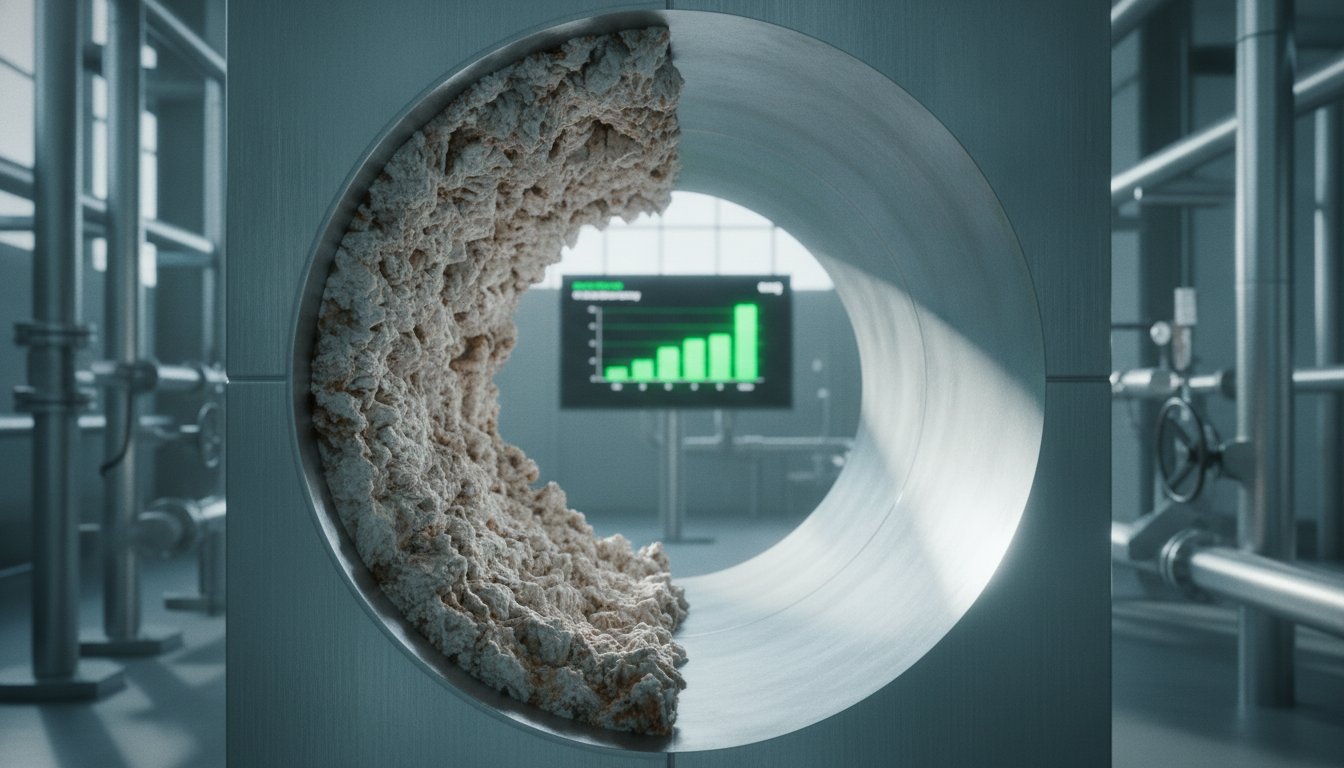
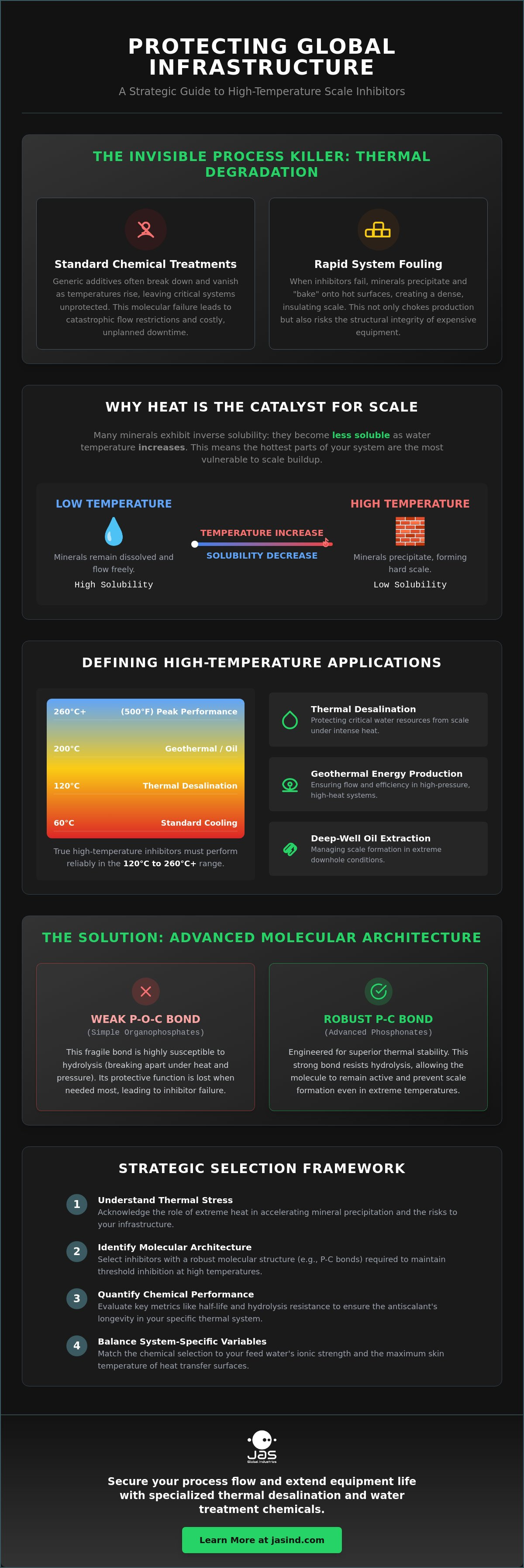
Heat serves as a powerful catalyst for fouling. It provides the kinetic energy needed to accelerate the precipitation of calcium carbonate and calcium sulfate. Many common minerals exhibit inverse solubility; they become less soluble as the water temperature increases. This paradox means that the hottest surfaces in your system, such as heat exchanger tubes, are exactly where scale is most likely to form. This "baking" effect creates a dense, insulating barrier. It doesn't just slow down production. It risks the structural integrity of expensive equipment and compromises the security of global resource management.
Defining High-Temperature Thresholds
Industrial operations define high temperature based on the specific application. In standard cooling towers, 60°C is common. However, a true scale inhibitor for high-temperature applications must perform in the 120°C to 200°C+ range. These conditions are standard in thermal desalination plants, geothermal energy production, and deep-well oil extraction. As fluid moves through these systems, sudden pressure drops can trigger temperature spikes. This often leads to rapid carbon dioxide loss, which spikes the pH and forces immediate mineral precipitation. Managing these variables requires a foundational industry presence that understands the fundamental needs of modern infrastructure.
Mechanisms of Thermal Resistance in Modern Antiscalants
Securing the integrity of high-heat systems requires a departure from traditional water chemistry. Modern antiscalants aren't just additives; they're precision-engineered tools for industrial security. They rely on sophisticated molecular architectures designed to withstand the brutal kinetic energy of extreme thermal environments. Unlike basic inhibitors that fracture under pressure, a scale inhibitor for high-temperature applications utilizes specific chemical bonds to maintain its protective function. This resistance isn't accidental; it's a result of calculated molecular engineering focused on the fundamental needs of global infrastructure.
Synthetic Polymers and Phosphonates
The stability of an inhibitor depends heavily on its atomic connections. In high-heat scenarios, the P-C (phosphonate-carbon) bond provides superior resistance to hydrolysis compared to the more fragile P-O-C bond found in simpler organophosphates. This robust backbone allows the molecule to remain active where others fail. Advanced maleic-based polymers represent the pinnacle of this technology, often maintaining their structural integrity and performance at temperatures reaching 260°C. These polymers use carboxylate groups to sequester metal ions, effectively neutralizing the building blocks of scale before they can deposit on critical surfaces. If you're managing complex thermal systems, selecting specialized water treatment antiscalants ensures long-term operational stability and asset protection.
Threshold Inhibition and Lattice Distortion
Efficiency in industrial water treatment is often measured by the ability to do more with less. Threshold inhibition allows for the prevention of mineral precipitation using sub-stoichiometric chemical levels, often at concentrations far below what traditional softening would require. This mechanism interferes with the initial nucleation phase, essentially "poisoning" the growth sites of forming crystals. Recent studies on a High-Temperature-Resistant Scale Inhibitor show that these molecules also perform crystal lattice distortion. By incorporating themselves into the mineral's structure, they create internal stresses that prevent the scale from forming a hard, tenacious layer on metal heat exchangers. Instead, the minerals remain as a soft, non-adherent sludge that is easily managed by the process flow.
Sequestration and Chelation in HT Systems
Stability is maintained through active protection. Specialty chemicals act as chelating agents, "wrapping" around scale-forming ions like calcium and magnesium to keep them soluble. While traditional softening requires a 1:1 ratio of chemical to mineral, sub-stoichiometric inhibition works at much lower ratios, drastically reducing chemical dosing costs. Dispersion serves as the final line of defense. It gives the particles a negative charge, causing them to repel each other and stay suspended in the fluid. This prevents settling in low-velocity areas and ensures that the system remains clear and efficient, even under the most demanding thermal loads found in global energy and water sectors.
Addressing Thermal Degradation: The Invisible Process Killer
Thermal degradation acts as a hidden catalyst for infrastructure failure. When a scale inhibitor for high-temperature applications enters an extreme thermal zone, it faces immediate kinetic pressure. This isn't just about the water chemistry; it's about the molecular survival of the treatment itself. Hydrolysis is the primary mechanism of this breakdown. It occurs when water molecules react with the inhibitor's functional groups, severing the bonds that enable mineral sequestration. Without a stable molecular structure, your chemical protection evaporates long before the water does.
The Hydrolysis Challenge
Synthetic polymers and polyphosphates offer vastly different profiles in the face of intense heat. Traditional polyphosphates are notoriously susceptible to hydrolysis. They often revert to orthophosphate in a matter of minutes when exposed to high temperatures. Synthetic polymers provide a more stable defense. Their carbon-carbon backbones resist the cleaving action of water, maintaining performance where others fracture. pH fluctuations further complicate this struggle. High pH levels can accelerate the degradation of specific phosphonates, while acidic environments might destabilize certain polymer chains. Modern laboratory testing protocols now prioritize measuring the "half-life" of these chemicals. This metric determines exactly how long an inhibitor remains effective before its concentration drops below the critical threshold required for system security.
Operational Risks of Chemical Failure
The consequences of inhibitor degradation are both severe and expensive. When the chemical fails, localized overheating occurs almost immediately. Scale acts as an insulator, trapping heat within the metal surfaces of heat exchangers. This forces the system to work harder, leading to metal fatigue and eventual rupture. Perhaps the most dangerous irony is when the degradation products themselves become the source of fouling. As phosphonates break down, they can release inorganic phosphate. This reacts with calcium to form calcium phosphate scale, a tenacious and difficult-to-remove deposit that can paralyze a facility.
Unplanned shutdowns represent a massive failure in resource management. Investing in high-performance chemistry is a strategic choice for operational stability. It protects the fundamental needs of society by ensuring stable process flows in critical sectors. This approach aligns with broader goals in Industrial Water Treatment, where protecting global infrastructure is paramount. Precision dosing strategies, guided by real-time thermal monitoring, allow operators to mitigate thermal stress. You don't just treat the water; you secure the entire industrial lifecycle. Protecting assets. Ensuring flow. Securing the future.
Strategic Selection: Evaluating Performance Metrics for HT Applications
Selecting a scale inhibitor for high-temperature applications is a rigorous risk management exercise. It requires moving beyond simple chemical specifications to embrace a comprehensive understanding of your system's thermal and ionic profile. While laboratory data provides a baseline, the true test occurs on the heat transfer surfaces where temperatures peak. A strategic selection framework ensures that your choice contributes to the long-term security of your infrastructure rather than becoming a source of operational instability.
The selection process follows a logical, four-step progression. First, you must analyze the ionic strength and brine chemistry of the feed water. High salinity can cause lower-quality inhibitors to "salt out," rendering them useless. Second, determine the maximum skin temperature of your heat transfer surfaces. This is often 20 to 30 degrees higher than the bulk fluid temperature. Third, calculate the residence time against the chemical's half-life. The inhibitor must remain active for the entire duration it spends in the high-heat zone. Finally, evaluate compatibility with other water treatment chemicals. Anionic inhibitors often react with cationic biocides, leading to the very precipitation you are trying to prevent.
The HT Inhibitor Checklist
- Thermal Longevity: The molecule must demonstrate stability at 150°C or higher for at least 24 hours of residence time.
- Synergistic Integrity: It should maintain performance when blended with corrosion inhibitors and biocides without causing turbidity.
- Regulatory Compliance: Ensure low environmental impact and full adherence to local discharge regulations to protect global resources.
Optimizing ROI through Technical Audits
On-site laboratory testing is the only way to develop custom dosing strategies that reflect real-world conditions. Generic dosages often lead to either equipment fouling or wasteful chemical spending. Strategic investments in Technical Consulting and Process Optimization Fees provide the necessary data to bridge the gap between chemical cost and operational ROI. In large-scale industrial operations, maintaining a 5% increase in heat transfer efficiency through optimized scale control can save facilities millions in annual energy expenditures while significantly reducing their carbon footprint. If you are ready to secure your process flow, exploring advanced water treatment antiscalants is the first step toward sustainable industrial excellence.
JAS Global Industries: Protecting Global Infrastructure
JAS Global Industries stands as a foundational pillar for the world's most critical resource sectors. We provide more than just chemical additives. We deliver the stability and security necessary to maintain global infrastructure. When you deploy a scale inhibitor for high-temperature applications from our portfolio, you are engaging with decades of corporate history and a mission-oriented approach to industrial protection. Our role is that of a global guardian. We ensure that energy and water systems remain operational under the most extreme thermal conditions. Protecting infrastructure. Securing resources. Empowering industry.
Thermal Desalination and Resource Security
In arid regions like Dubai and Riyadh, water security is synonymous with national stability. Thermal desalination plants, including Multi-Stage Flash (MSF) and Multi-Effect Distillation (MED) facilities, operate at the edge of chemical possibility. JAS Global Industries provides specialized antiscalants designed specifically for these high-heat environments. These formulations prevent the rapid fouling that can paralyze a region's water supply. By maintaining peak efficiency in these plants, we help secure the fundamental needs of society. Our commitment goes beyond simple logistics. It focuses on the long-term human impact of technical reliability and the stability of essential resources.
Custom Formulation and Global Support
Every industrial site presents a unique mineral profile and thermal challenge. Off-the-shelf products often fail to address the specific nuances of local feed water. Our global R&I centers focus on site-specific chemical engineering to develop tailor-made solutions. This bespoke approach ensures that your scale inhibitor for high-temperature applications performs exactly as required by your specific skin temperatures and residence times. Sustainability is a core trait of our personality. We prioritize high-efficiency, low-dose technologies that reduce chemical footprints while maximizing equipment life.
Our global logistics network ensures that these vital solutions reach your facility without delay. Reliability is rooted in a robust chemicals management plan that prioritizes safety and stability. We don't just ship products; we build long-term partnerships through recurring technical audits and on-site troubleshooting. This proactive stance reduces long-term OPEX and prevents the catastrophic failures that threaten industrial continuity. Protecting global infrastructure is a heavy responsibility. It's a mission we are proud to lead with technical expertise and ethical purpose.
If you're ready to optimize your system's thermal performance and secure your process flow, our experts are available for detailed consultation. Contact JAS Global Industries for a Technical Audit to begin your journey toward industrial excellence and operational security.
Securing the Future of Industrial Thermal Systems
Thermal stability is a managed molecular strategy rather than a binary state. Throughout this guide, we've explored how a scale inhibitor for high-temperature applications must resist hydrolysis and maintain threshold inhibition to protect critical global infrastructure. By moving from generic treatments to precision-engineered chemical strategies, industrial operators can effectively eliminate the "invisible killer" of thermal degradation. Protecting these assets ensures the long-term stability of the world's most vital energy and water resources.
Since 1998, JAS Global Industries has acted as a vital global guardian, establishing a robust presence with R&I centers focused on the world's most demanding environments. From specialized solutions for MSF and MED desalination plants to a proven track record in extreme Middle Eastern climates, we provide the reliability modern infrastructure requires. Our technical expertise ensures that your process flow remains stable, protecting both your equipment and your bottom line. It's an approach rooted in corporate maturity and a deep sense of global responsibility.
Consult with our specialists for a tailor-made HT scale inhibitor strategy. Let's work together to secure your system's integrity and advance your operational excellence.
Frequently Asked Questions
What is the maximum temperature a standard scale inhibitor can handle?
Standard scale inhibitors typically begin to lose their molecular integrity between 100°C and 120°C. Beyond this range, the chemical bonds fracture through hydrolysis, rendering the treatment ineffective for mineral control. Operating outside these thermal limits leaves your infrastructure vulnerable to rapid fouling. Protecting systems in the 150°C to 260°C range requires a specialized scale inhibitor for high-temperature applications engineered for extreme resilience.
How does thermal degradation affect the efficiency of water treatment?
Thermal degradation destroys the molecular architecture required for threshold inhibition, leading to an immediate loss of protective efficacy. As the active molecules break down, mineral precipitation accelerates on heat transfer surfaces. This creates an insulating layer that forces higher energy consumption and risks catastrophic equipment failure. Maintaining chemical stability is vital for the long-term security of your industrial process flow and infrastructure.
Can I use the same scale inhibitor for RO and thermal desalination?
No, Reverse Osmosis and thermal desalination require fundamentally different chemical strategies. RO antiscalants focus on preventing membrane fouling at ambient or slightly elevated temperatures. Thermal desalination requires a scale inhibitor for high-temperature applications that survives the intense heat of MSF or MED processes without undergoing hydrolysis. Using the wrong chemistry leads to rapid equipment failure and compromised water production security.
Is calcium carbonate the only scale concern in high-temperature systems?
Calcium carbonate is common, but calcium sulfate and magnesium hydroxide are significant threats in high-heat environments. Calcium sulfate is particularly dangerous because its solubility decreases sharply as temperatures rise, leading to tenacious deposits. Magnesium hydroxide often precipitates in thermal units operating at high top brine temperatures. Managing these diverse mineral profiles requires a sophisticated understanding of inverse solubility and thermal kinetics.
How do I calculate the correct dosing for an HT scale inhibitor?
Dosing is calculated by analyzing the Langelier Saturation Index alongside specific residence times and maximum skin temperatures. On-site technical audits are essential to determine the precise concentration needed to maintain sub-stoichiometric inhibition. This prevents both under-treatment and unnecessary chemical waste. Precision dosing ensures that your chemical strategy contributes to the stability of critical infrastructure while optimizing long-term operational expenditures.
What are the environmental implications of using high-temperature antiscalants?
Environmental impact is managed through the development of phosphorus-free and biodegradable formulations. Stricter global regulations, such as the U.S. Clean Water Act, mandate that chemical additives don't compromise aquatic ecosystems. Modern antiscalants balance industrial security with ethical responsibility. These high-efficiency technologies minimize the chemical footprint while ensuring the stability of critical global water and energy resources without compromising sustainability goals.
Why is phosphonate stability a concern in geothermal applications?
Geothermal systems often reach temperatures exceeding 200°C, where many standard phosphonates undergo rapid hydrolysis. When these molecules break down, they can release orthophosphate into the process stream. This orthophosphate reacts with calcium to form calcium phosphate scale, a difficult-to-remove deposit that can paralyze production. Protecting geothermal assets requires advanced synthetic polymers that maintain their protective function under extreme geothermal pressure and heat.
How does JAS Global Industries customize formulations for different industrial plants?
JAS Global Industries utilizes its network of global R&I centers to engineer site-specific solutions based on unique mineral profiles. We move beyond off-the-shelf products to develop chemicals that match the exact thermal and ionic stress of a specific facility. This bespoke engineering ensures the protection of critical infrastructure and long-term operational stability. Our commitment to technical excellence provides a reliable foundation for the world's most demanding industrial sectors.