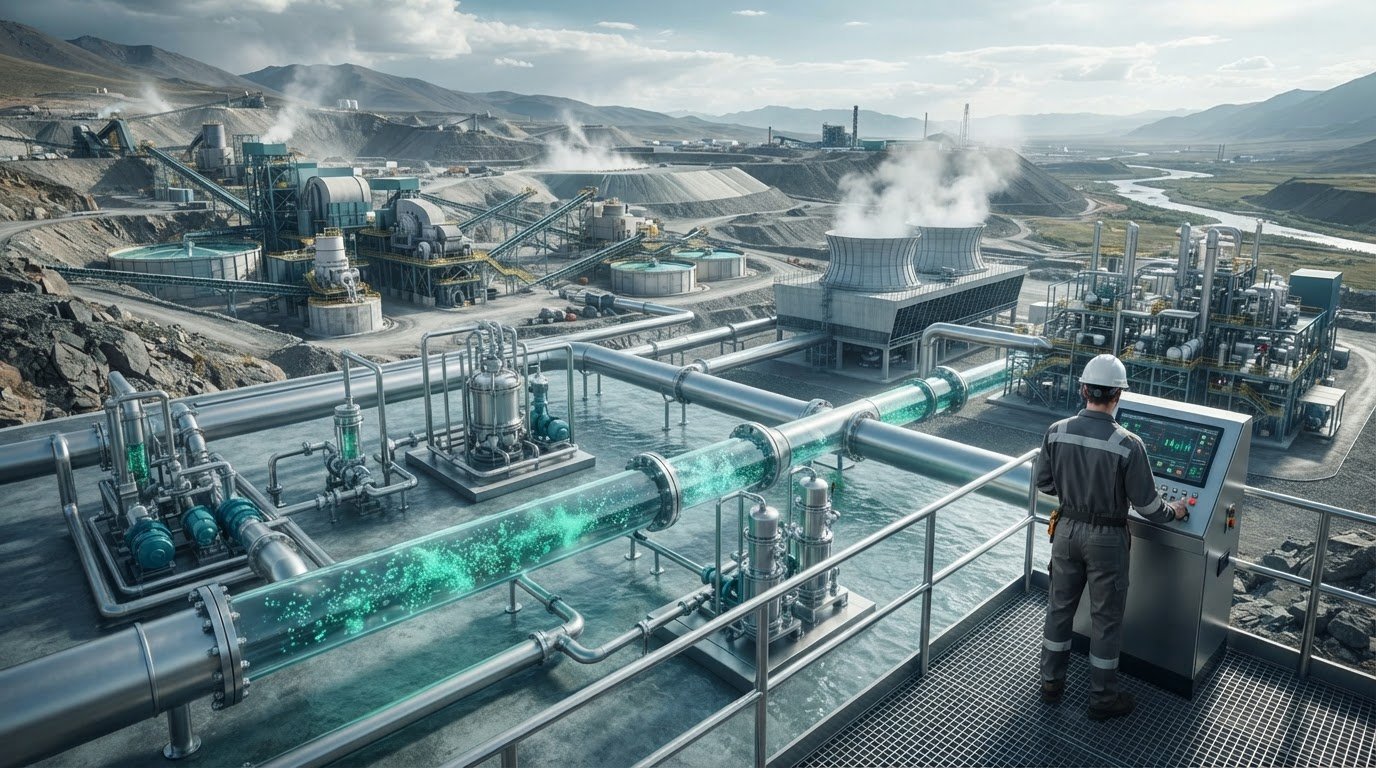


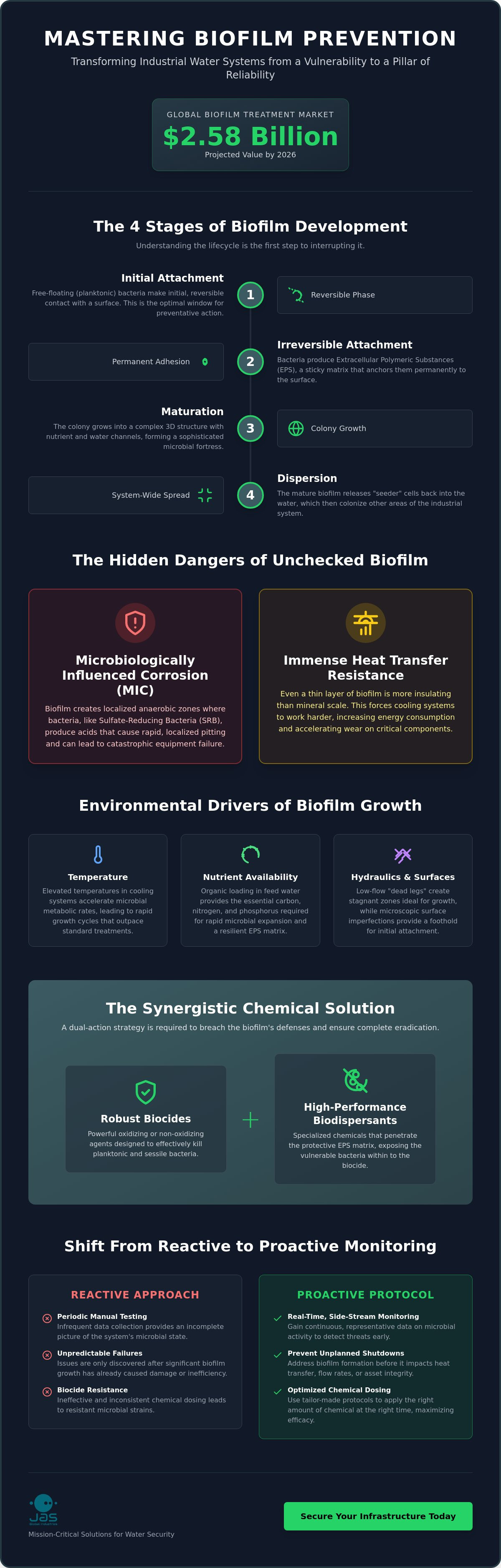
Did you know that the global biofilm treatment market is projected to reach $2.58 billion in 2026? This massive figure highlights a critical reality: microbial growth is a fundamental threat to industrial security rather than a simple maintenance chore. Most facility managers accept recurring shutdowns and unpredictable equipment failure as the unavoidable costs of operation. You've likely seen how ineffective chemical dosing leads to biocide resistance, leaving your infrastructure vulnerable. We agree that protecting your assets shouldn't be a constant cycle of reactive cleaning. By prioritizing the strategies for preventing biofilm in industrial water systems, you can transform your water infrastructure into a reliable pillar of your facility's success.
This article provides the technical roadmap you need to achieve total process security. You'll learn how to use advanced chemical formulations, including specialized biocides and dispersants, to eliminate biofilm-related downtime. We'll preview the proactive methods that optimize chemical consumption and significantly extend your equipment's lifespan. Let's explore how to build a more resilient industrial future through proactive protection and technical excellence.
Key Takeaways
- Understand the biological transition from planktonic bacteria to sessile communities to interrupt attachment before it becomes irreversible.
- Identify and mitigate high-risk zones like low-flow "dead legs" where stagnant conditions accelerate the formation of protective microbial matrices.
- Implement a dual-action chemical strategy for preventing biofilm in industrial water systems by combining robust biocides with high-performance biodispersants.
- Transition from periodic manual testing toward real-time, side-stream monitoring to gain representative data and prevent unpredictable equipment failure.
- Adopt tailor-made chemical dosing protocols that optimize consumption while securing the long-term reliability of mission-critical industrial infrastructure.
The Biofilm Life Cycle: Understanding the Threat to Industrial Infrastructure
Industrial water systems are the lifeblood of global production. They provide the cooling, heating, and processing power required for modern infrastructure. However, these systems are constantly under siege by microscopic invaders. To understand what is a biofilm, one must view it as a sophisticated biological fortress rather than a random collection of bacteria. It is a sessile microbial community, firmly attached to a surface and embedded within a self-produced matrix of Extracellular Polymeric Substances (EPS). This transition from planktonic, free-floating bacteria to a structured community marks the beginning of a significant operational threat.
The EPS matrix serves as the primary barrier to traditional biocide efficacy. This sticky, protective hydrogel acts as a chemical shield, neutralizing disinfectants before they reach the vulnerable cells beneath. Beyond biological protection, biofilm imposes a heavy economic burden. It creates immense heat transfer resistance; even a thin layer is more insulating than mineral scale. This inefficiency forces systems to work harder, leading to increased pumping energy and accelerated wear on critical components. Effective strategies for preventing biofilm in industrial water systems are not just maintenance tasks; they are essential for process security.
The Four Stages of Biofilm Development
The life cycle begins with initial reversible attachment. During this brief window, bacteria loosely associate with a surface. This is the optimal time for prevention. Soon, the formation of conditioning films leads to irreversible attachment, where specialized proteins lock the microbes in place. As the colony matures, it develops complex nutrient channels to sustain the deep layers of the community. Finally, the biofilm reaches a stage of dispersion. It releases "seeder" cells back into the water flow, allowing the infection to spread rapidly to other parts of the infrastructure.
Microbiologically Influenced Corrosion (MIC)
Biofilm does more than just block flow; it actively destroys metal. Microbiologically Influenced Corrosion (MIC) occurs when localized microbial activity creates highly acidic or corrosive microenvironments directly against the pipe wall. Sulfate-Reducing Bacteria (SRB) are particularly dangerous in industrial settings. They thrive in the anaerobic zones deep within the biofilm, producing hydrogen sulfide that causes rapid, localized pitting. In cooling towers and heat exchangers, MIC can lead to catastrophic equipment failure and expensive unplanned shutdowns. Preventing biofilm in industrial water systems is the only reliable way to stop this hidden degradation before it compromises asset integrity.
Environmental Drivers of Biofilm Growth in Process Water
Industrial water systems are dynamic environments where specific physical and chemical variables dictate the speed of microbial colonization. Temperature is a significant driver. In cooling systems, elevated temperatures accelerate metabolic rates, allowing bacteria to reach critical mass in hours rather than days. This biological acceleration demands a strategic approach to preventing biofilm in industrial water systems; standard treatment intervals often fail to keep pace with these rapid growth cycles. When metabolic activity peaks, the production of the protective EPS matrix intensifies, making the colony much harder to eradicate once established.
Nutrient availability also plays a decisive role in system security. Organic loading in industrial feed water provides the carbon, nitrogen, and phosphorus required for microbial expansion. When these nutrients are abundant, the biofilm grows thicker and more resilient against chemical intervention. Surface metallurgy and roughness further complicate the issue. Microscopic scratches, pits, and weld seams on metal surfaces provide a "toe-hold" for initial microbial adhesion. These imperfections shield early colonizers from the mechanical force of flowing water, facilitating the transition from free-floating cells to a permanent community.
Hydraulic Dynamics and Stagnation
Fluid velocity directly influences the architecture of a microbial colony. High shear stress typically results in thinner, more compact biofilms that are harder to penetrate. Conversely, low-flow "dead legs"—sections of piping with little to no circulation—become primary breeding grounds. These stagnant zones allow bacteria to settle and multiply without interference. Modern efficiency measures, such as variable frequency drives (VFDs), can inadvertently promote growth by reducing flow rates below the threshold required to prevent attachment. Identifying and eliminating these stagnant areas is a foundational step in any comprehensive overview of biofilm control within a complex facility.
Water Chemistry and Nutrient Loading
The chemical composition of the water determines the stability of the initial conditioning film. Phosphorus and nitrogen often act as limiting nutrients; when their levels rise due to process contamination or poor makeup water quality, microbial populations explode. pH fluctuations also impact the structural integrity of the EPS matrix and the efficacy of biocides. Mineral deposits and scale provide a porous surface that traps organic matter and microbes. Utilizing advanced water treatment scale inhibitors can prevent these deposits from forming, effectively removing the physical foundation that biofilms need to thrive. By stabilizing water chemistry, operators create an environment that is fundamentally hostile to microbial attachment.
Synergistic Chemical Strategies for Biofilm Prevention
Eradicating an established microbial colony is significantly more resource-intensive than preventing its initial attachment. A structural security strategy for preventing biofilm in industrial water systems relies on the synergy of multiple chemical classes rather than a single biocide. While many operators focus solely on microbial mortality, true process security addresses the structural components that allow these communities to survive. This requires a calculated balance between oxidizing agents for rapid disinfection and non-oxidizing biocides for long-term residual protection. By shifting focus from remediation to prevention, facilities can maintain a clean baseline that protects the entire infrastructure from unpredictable failure.
Choosing the right baseline biocide depends on the specific chemistry of your process water. In high-pH environments, traditional chlorine often loses efficacy because it dissociates into less active forms. Bromine serves as a more stable alternative in these conditions, providing rapid oxidation even as alkalinity rises. However, even the strongest oxidizers struggle to penetrate a thick EPS matrix on their own. To ensure compliance with OSHA guidelines for biofilm control, facilities must integrate non-oxidizing biocides like isothiazolones or quaternary ammonium compounds. These molecules offer superior stability and target specific metabolic pathways, and rotating them prevents the development of biocide-resistant microbial strains.
Oxidizing vs. Non-Oxidizing Biocide Programs
Oxidizing biocides act quickly to kill free-floating bacteria, but they're often consumed by organic debris before they reach the pipe surface. Non-oxidizing biocides provide a secondary layer of protection by remaining active in the system for longer periods. A successful program doesn't rely on one chemical indefinitely. Instead, it utilizes a rotational strategy. This approach prevents the microbial population from adapting to a single mode of action. It's a proactive method that ensures your biocide program remains effective against diverse bacterial species, including the highly corrosive sulfate-reducing bacteria mentioned earlier.
The Power of Biodispersants and Scale Inhibitors
The most effective prevention programs use biodispersants to neutralize the "glue" that holds biofilms together. These specialized surfactants prevent planktonic bacteria from transitioning to a sessile state by keeping surfaces clean and slick. Water Treatment Antiscalants reduce the surface area available for microbial colonization by preventing the formation of rough mineral deposits. Without this mineral scaffolding, bacteria cannot find the sheltered microenvironments they need to establish a foothold. This synergy between Water Treatment Scale Inhibitors and biocides ensures that chemical treatments reach their intended targets rather than being neutralized by inorganic debris. Reducing the biological demand of the system through consistent pre-treatment is the only way to achieve long-term asset reliability.
Implementing a Proactive Monitoring and Dosing Protocol
Transitioning from reactive cleanup to proactive security requires more than just high-quality chemicals. It demands a shift from periodic sampling toward real-time process monitoring. Traditional lab cultures often take 48 to 72 hours to yield results. By the time the data arrives, a microbial colony has already transitioned from reversible to irreversible attachment. For preventing biofilm in industrial water systems, operators should utilize rapid assessment tools like Adenosine Triphosphate (ATP) testing. This provides a biological baseline in minutes, allowing for immediate adjustments to dosing protocols before a "toe-hold" is established on pipe surfaces.
Surface-level data is far more valuable than bulk water analysis. Planktonic counts in the water column rarely reflect the reality of what's happening on the metal walls. Side-stream monitoring devices simulate the actual temperature and flow conditions of your heat exchangers, providing a representative look at microbial attachment. Integrating bio-probes and corrosion coupons into these side-streams allows you to measure the tangible impact on your assets. This data-driven approach ensures that your treatment program isn't just a best guess, but a precise response to the biological pressures within your specific infrastructure.
Advanced Detection Technologies
Online fluorometry tracks biocide residuals in real-time, ensuring that concentrations never dip below the threshold required for protection. This technology is vital for systems with high demand or varying makeup water quality. Monitoring differential pressure across heat exchangers serves as an early warning system; even slight increases can indicate the onset of biofilm-induced resistance. Some facilities are now utilizing digital twins to predict proliferation based on fluctuating water chemistry and seasonal temperature changes. This creates a predictive model for long-term stability and asset protection.
Establishing an Operational Dosing Schedule
Continuous dosing maintains a consistent defense, but periodic "slug" dosing can shock the system and eliminate any emerging resistant strains. Automated dosing systems are essential for reducing human error and ensuring that chemical delivery remains precise 24/7. This level of control is a core requirement for any global chemicals management plan. To secure your facility's future, you must move beyond the "set it and forget it" mentality when preventing biofilm in industrial water systems.
Implement a more resilient monitoring and dosing strategy with our specialized Water Treatment Biocides.
JAS Global Industries: Mission-Critical Solutions for Water Security
JAS Global Industries operates as a foundational presence in the world's most vital industries. We provide the technical expertise and authoritative leadership required for preventing biofilm in industrial water systems across the Middle East, Asia, and Europe. Our mission transcends simple chemical supply; we act as a global guardian for the infrastructure that sustains modern society. Through our dedicated Research and Innovation (R&I) centers, we develop sustainable biocides and dispersants that ensure long-term process stability. By integrating our specialized Mining Solutions with advanced water treatment, we secure the entire resource lifecycle from extraction to final processing.
Process security in extreme environments requires a departure from generic treatment plans. High-temperature cooling towers and high-salinity desalination plants present unique biological challenges that "off-the-shelf" chemicals cannot address. We focus on the fundamental needs of your facility, ensuring that every chemical intervention serves a broader purpose of asset protection and operational continuity. Our commitment to excellence allows us to build reliable, long-term partnerships with global leaders who prioritize safety and sustainability.
Tailor-Made Formulations for Complex Systems
Every industrial facility has a unique metallurgical and chemical profile. Our engineers analyze specific plant metallurgy to design non-corrosive biocide programs that don't compromise the integrity of your alloys. We develop custom Water Treatment Biocides specifically for high-salinity or high-temperature environments where traditional molecules often fail. In one recent application at a major thermal desalination plant, our team reduced downtime by 15% through a redesigned dosing protocol. This optimization didn't just kill bacteria; it secured the plant's thermal efficiency and extended the lifespan of its heat exchange surfaces.
A Partnership for Long-Term Operational Reliability
We believe that true water security is built on a foundation of data and trust. Our services go far beyond chemical delivery to include technical consulting and comprehensive process audits. These audits identify hidden vulnerabilities, such as stagnant dead legs or ineffective dosing schedules, that lead to unpredictable failure. JAS Global’s commitment to sustainable resource protection ensures that your facility meets evolving environmental standards while maintaining peak efficiency. We act as your strategic partner, focusing on the results that matter most: eliminated downtime, optimized consumption, and secured infrastructure.
Secure your facility's future today. Contact JAS Global Industries for a comprehensive water system audit and a strategic approach to preventing biofilm in industrial water systems.
Securing the Future of Industrial Water Infrastructure
Securing industrial infrastructure requires a fundamental shift from reactive remediation to structural security. We've explored how the synergy of advanced biocides and biodispersants, supported by real-time monitoring, creates a hostile environment for microbial colonization. By mastering the strategies for preventing biofilm in industrial water systems, you protect your facility from the hidden costs of microbiologically influenced corrosion and unpredictable efficiency loss. True process security isn't just about treatment; it's about the consistent application of technical expertise to safeguard your mission-critical assets.
JAS Global Industries stands as a vital guardian for global resources. We bring over 25 years of specialty chemical expertise and the power of global R&I centers to develop custom formulations for the world's most demanding environments. Whether you're managing complex operations in the mining, fertilizer, or desalination sectors, we provide tailor-made solutions that ensure long-term reliability and operational stability. Partner with JAS Global for Advanced Water Treatment Solutions and transform your water system into a resilient pillar of industrial security. Your commitment to technical excellence today secures the industrial stability of tomorrow.
Frequently Asked Questions
What is the most effective chemical for preventing biofilm in industrial systems?
A synergistic combination of oxidizing biocides, non-oxidizing biocides, and biodispersants provides the most effective protection. No single chemical can address every stage of the microbial life cycle. Oxidizers like bromine offer rapid disinfection, while non-oxidizing agents provide the residual stability needed for long-term control. Biodispersants are the final essential component. They prevent the initial attachment of planktonic bacteria to your infrastructure's surfaces, securing the system from the ground up.
How does biofilm differ from mineral scale in water pipes?
Biofilm is a living microbial community, while mineral scale is a purely inorganic crystalline deposit. Scale forms from mineral precipitation like calcium carbonate, but biofilm is a self-replicating biological structure that actively adapts to its environment. Biofilm is significantly more insulating than scale, meaning even a thin layer causes greater heat transfer resistance. It also promotes microbiologically influenced corrosion, which can cause rapid metal loss under the deposit.
Can I prevent biofilm using only chlorine-based oxidizers?
Relying solely on chlorine is frequently insufficient, particularly in high-pH environments where its disinfecting power diminishes. Chlorine also lacks the ability to penetrate the protective EPS matrix once a colony is established. Successfully preventing biofilm in industrial water systems requires a multi-faceted approach. Integrating biodispersants and non-oxidizing biocides ensures that the treatment reaches the pipe surface rather than being neutralized by the outer layers of the biofilm community.
How often should I test my industrial water system for biological activity?
Daily monitoring using rapid assessment tools like ATP testing is the modern standard for critical infrastructure. While monthly lab cultures provide a historical record, they don't offer the real-time data needed for proactive adjustments. We recommend using online sensors to track biocide residuals and differential pressure. This allows operators to detect microbial activity early and adjust dosing protocols before significant attachment occurs, ensuring continuous process security and reliability.
What are the first signs of biofilm formation in a cooling tower?
Early indicators include a slight rise in approach temperatures and a noticeable increase in biocide consumption as organic demand grows. You might also observe a slippery feel on basin surfaces or a rise in differential pressure across heat exchangers. These subtle changes often precede the visible slime that indicates a mature colony. Monitoring these variables allows for intervention before the biological matrix becomes thick enough to compromise heat transfer efficiency or cause flow restrictions.
Is it possible to completely eradicate a mature biofilm without a system shutdown?
Total eradication of a mature biofilm often requires mechanical cleaning or high-concentration chemical shocks during a scheduled shutdown. While continuous dosing can reduce biomass, the protective EPS matrix is designed to withstand chemical stress. Prevention is the only reliable way to avoid the massive costs of unplanned downtime. Maintaining a clean system baseline ensures that your infrastructure remains secure without the need for aggressive and expensive remediation efforts that interrupt production.
How do biodispersants improve the efficiency of biocides?
Biodispersants act as surfactants that weaken the biological glue holding the community together. By destabilizing the EPS matrix, they expose the underlying bacteria to the lethal action of biocides. This synergy allows for more effective treatment at lower chemical concentrations. It's a strategic way to optimize chemical consumption while ensuring that your biocide program reaches the surface-attached microbes that cause corrosion, energy loss, and flow resistance throughout the system.
Does reverse osmosis (RO) remove the risk of biofilm in downstream piping?
Reverse osmosis significantly reduces the microbial load but doesn't eliminate the risk of downstream colonization. Bacteria are incredibly resilient and can re-establish themselves in permeate lines or storage tanks if even a small number bypass the membranes. Effectively preventing biofilm in industrial water systems requires a secondary disinfection strategy for downstream piping. This ensures that the high-purity water produced by the RO system doesn't become a breeding ground for new microbial communities.