
While the MSHA still recognizes a 10 ppm exposure limit for hydrogen sulfide, modern industrial hygiene standards have shifted toward a much more protective 1 ppm threshold. For mining leaders, this gap represents more than a regulatory hurdle; it's a fundamental challenge to the stability of global resource extraction. Effective H2S control in mining operations is no longer a secondary safety measure. It's a critical process requirement. As average copper grades have decreased by approximately 40% since 1991, the complexity of managing sulfur-rich deposits has reached a point where passive monitoring is simply insufficient to protect your assets.
You likely understand the pressure of seeing expensive infrastructure succumb to rapid corrosion or watching flotation yields drop due to gas interference. We recognize that your mission is to maintain safety and efficiency in a volatile environment. This guide provides the technical framework to move beyond simple detection and into active neutralization. You'll learn how to master hydrogen sulfide risks to protect your personnel and extend the lifespan of your critical equipment. We preview the latest chemical mitigation strategies and reagent optimization techniques that ensure a zero-incident safety record while maximizing mineral recovery for the long term.
Key Takeaways
- Recognize why the "rotten egg" myth is a dangerous misconception and how olfactory paralysis masks life-threatening gas concentrations.
- Differentiate between biological formation in tailings and chemical reactions in leaching circuits to target the root cause of gas generation.
- Move beyond passive sensors by integrating active H2S control in mining operations to neutralize risks before they reach the atmosphere.
- Execute a structured management plan, starting with technical audits and laboratory validation, to ensure optimized reagent dosing and mineral yield.
- Protect long-term infrastructure investments by implementing specialized corrosion control strategies that extend equipment lifespan.
The Invisible Threat: Understanding H2S Risks in Modern Mining
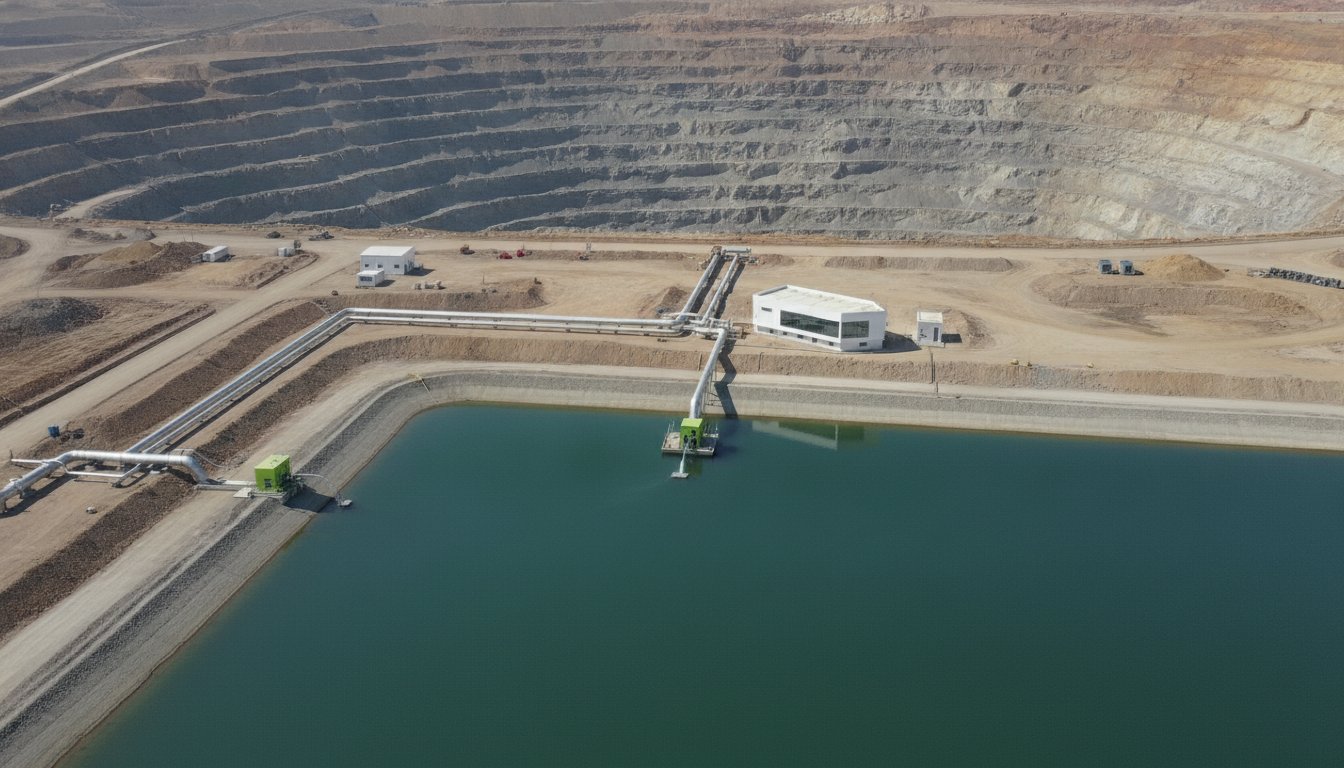
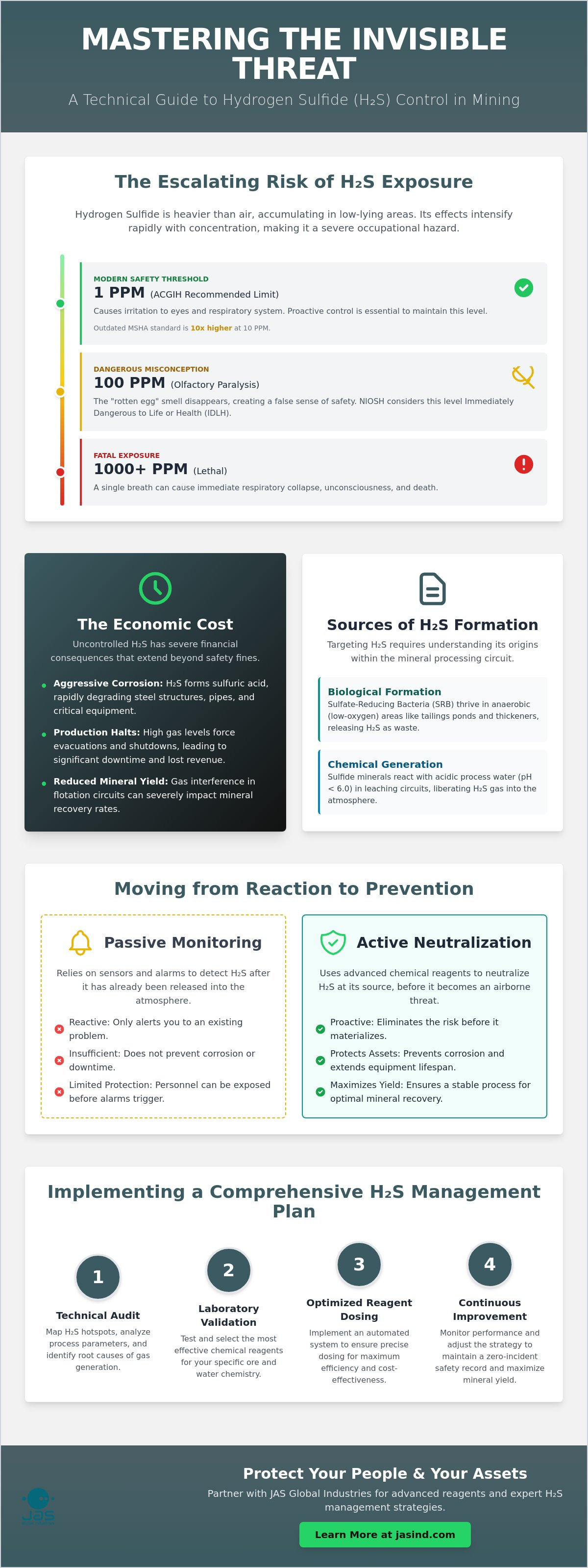
Hydrogen sulfide (H2S) is a colorless, highly toxic gas that presents a constant challenge in both underground and open-pit environments. It typically originates from the natural decomposition of sulfur-bearing minerals or the chemical interactions within processing circuits. While many operators rely on the characteristic smell of sulfur as a warning, this is a dangerous misconception. At concentrations near 100 ppm, H2S causes olfactory paralysis, effectively deadening the sense of smell and leaving personnel defenseless without electronic detection. This is why The Invisible Threat: Understanding H2S remains a primary concern for safety managers worldwide. Reliable H2S control in mining operations is not just a safety protocol; it is an economic safeguard that prevents the absence of odor from being mistaken for the absence of risk.
Health Hazards and Exposure Thresholds
The physiological impact of H2S is rapid and severe. Exposure at even 1 ppm, the current ACGIH recommended limit for 2026, can cause irritation to the eyes and respiratory system. As levels rise, the risks escalate sharply. The National Institute for Occupational Safety and Health (NIOSH) designates 100 ppm as the concentration Immediately Dangerous to Life or Health (IDLH). At 1000 ppm, a single breath can lead to immediate collapse and death. Because H2S is heavier than air, it tends to accumulate in low-lying, poorly ventilated areas such as sumps, pump rooms, and confined storage spaces. Current MSHA standards for metal and nonmetal mines still defer to an older 10 ppm threshold, but ethical corporate governance demands a shift toward the more stringent 1 ppm benchmarks to ensure total personnel protection.
The Economic Impact of Uncontrolled H2S
Beyond the immediate risk to human life, H2S acts as a corrosive catalyst that degrades the structural integrity of the mine. It reacts with moisture to form sulfuric acid, which aggressively attacks steel structures, electrical cabling, and processing equipment. This chemical degradation leads to premature equipment failure and significant operational downtime. When H2S levels exceed safety thresholds, entire sections of a mine must be evacuated, halting production and inflating the total cost of ownership. Integrating advanced mining solutions into the process circuit is essential for stabilizing these environments. By neutralizing H2S at the source, operators can prevent the rapid deterioration of expensive mining infrastructure and maintain a steady recovery rate without the constant threat of gas-related interruptions. Effective H2S control in mining operations ensures that technical performance and safety go hand in hand.
Mechanisms of H2S Formation in Mineral Processing
Hydrogen sulfide does not appear by chance. It is the predictable byproduct of specific environmental and chemical triggers within the mining circuit. In underground environments, geological release occurs when drilling or excavation intercepts pressurized gas pockets trapped within the ore body. However, the most persistent gas challenges stem from the processing circuit itself. Temperature and pH levels act as primary catalysts for gas liberation. Higher temperatures in deep mines accelerate chemical kinetics, while acidic environments significantly lower the solubility of sulfide ions, forcing the gas out of solution and into the atmosphere.
Biological vs. Chemical Gas Generation
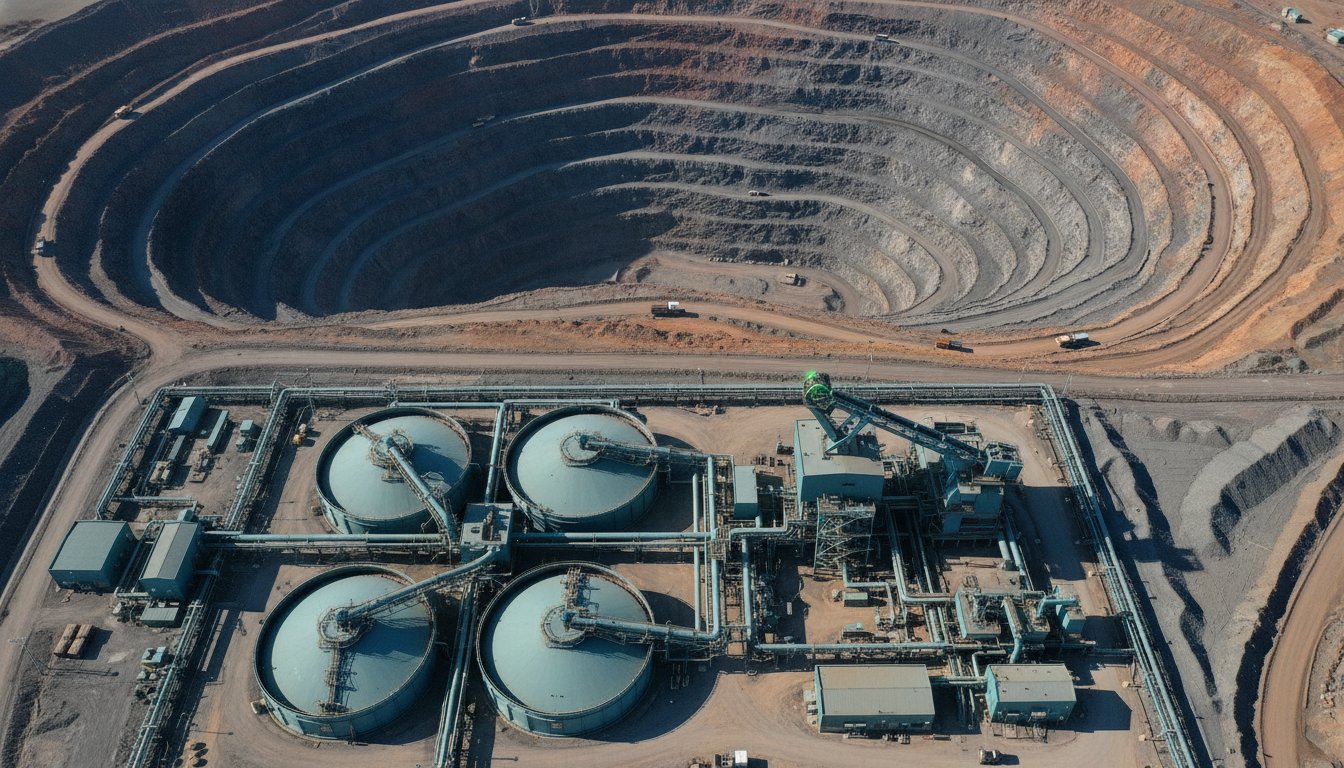
Biological formation occurs through the metabolic activity of Sulfate-Reducing Bacteria (SRB). These microorganisms thrive in anaerobic conditions found in stagnant water, tailings ponds, and thickeners. They extract oxygen from sulfates for respiration, releasing H2S as a metabolic waste product. Chemically, gas is generated when sulfide minerals react with acidic process water during leaching or within acid-mine drainage systems. Developing a Comprehensive H2S Management Plan requires mapping these hotspots to prevent localized gas accumulation. Hydrogen sulfide gas becomes most volatile and prone to atmospheric liberation when the process water pH drops below 6.0.
Impact on Mineral Flotation and Recovery
The presence of dissolved H2S extends beyond safety risks; it directly undermines mineral recovery efficiency. Dissolved sulfide ions act as unintended depressants, coating mineral surfaces and preventing the effective attachment of mining flotation collectors. This interference destabilizes the froth and reduces the overall grade of the mineral concentrate. When H2S control in mining operations is neglected, reagent consumption for collectors and frothers often spikes as operators attempt to compensate for poor recovery rates. This creates a cycle of inefficiency that erodes profit margins.
Achieving a high-purity concentrate requires a stable chemical environment. Effective H2S control in mining operations neutralizes these interfering ions, ensuring that your flotation reagents perform as intended. This stability protects your mineral yield and optimizes your total reagent spend. To maintain the integrity of your recovery circuit, consider integrating specialty mining reagents designed to stabilize complex sulfide ores.
Strategic Comparison: Passive Monitoring vs. Active Chemical Mitigation
Traditional safety protocols often rely heavily on atmospheric monitoring. While sensors are vital for detecting hydrogen sulfide safety hazards, they represent a reactive stance. A sensor only alerts personnel once the gas is already present in the environment. This creates a dangerous reliance on evacuation rather than prevention. For a robust approach to H2S control in mining operations, managers must shift from passive observation to active chemical neutralization. This transition ensures that the gas is managed within the process stream or water circuit before it ever reaches the mine's atmosphere.
The economic trade-off between ventilation and chemistry is often misunderstood. Increasing ventilation rates to dilute gas concentrations consumes immense amounts of electrical power, especially in deep underground mines. In contrast, targeted h2s treatment through chemical dosing can be far more cost-effective. By neutralizing the gas at the source, operators can maintain lower ventilation speeds while still meeting the 1 ppm ACGIH threshold. The most efficient operations use monitoring data to drive automated dosing systems, creating a synergy that optimizes reagent consumption and ensures continuous protection.
The Role of H2S Scavengers
Chemical scavengers are the frontline of active mitigation. These reagents react with dissolved H2S to form stable, non-toxic compounds that remain in the process water. Choosing the right chemistry is critical for performance and safety:
- Triazine-based scavengers: Known for rapid reaction kinetics, these are highly effective in high-flow environments where immediate neutralization is required.
- Non-triazine alternatives: Preferred in circuits where nitrogen-based by-products might interfere with downstream mineral processing or environmental discharge limits.
- Reaction speed: In fast-moving mining circuits, chemicals must neutralize gas in seconds to prevent atmospheric release at transfer points.
Biocides and Metabolic Inhibitors
While scavengers treat the gas, biocides target the biological source. Sulfate-reducing bacteria (SRB) colonies often establish themselves in stagnant sumps or tailings pipelines. Implementing specialized biocides within your industrial water treatment program prevents the metabolic production of H2S. This long-term prevention strategy is often more sustainable than reactive shock treatments. It's essential to ensure these inhibitors are compatible with your existing mineral recovery reagents to avoid disrupting flotation or leaching yields. Proper H2S control in mining operations requires this dual approach: neutralizing existing gas while suppressing the microbial activity that generates it.
Implementing a Comprehensive H2S Management Plan
Operational stability in high-sulfide environments depends on more than just high-quality reagents. It requires a disciplined, four-step methodology that integrates technical expertise with real-time process control. A robust strategy ensures that H2S control in mining operations is proactive, measurable, and scalable across different site conditions. By treating gas management as a core process variable, operators can align safety goals with mineral recovery targets. This structured approach must be fully integrated into your site’s broader chemicals management plan to ensure long-term effectiveness and regulatory compliance.
Technical Audits and On-Site Testing
The first phase of any management plan involves a site-wide technical audit to identify H2S generation points. This audit maps every potential risk area, from stagnant sumps and tailings thickeners to pressurized pockets in the underground face. We analyze water chemistry to determine sulfate levels, pH fluctuations, and the specific microbial load of sulfate-reducing bacteria. In underground settings, airflow modeling predicts where gas is likely to accumulate, allowing for the strategic placement of both sensors and dosing units. Every ore body presents a unique chemical signature, necessitating tailor-made scavenger formulations that account for specific mineralogical interference and water quality parameters. Laboratory validation ensures the chosen reagent reacts with the necessary kinetics before full-scale implementation.
Dosing Optimization and Automation
Once the formulation is verified, the focus shifts to precision execution through a designed dosing strategy. Selecting the correct dosing points is vital to ensure maximum contact time and complete reaction before the process stream reaches the open atmosphere. Modern H2S control in mining operations is increasingly driven by "Smart Dosing" technologies. These systems utilize IoT-enabled sensors to monitor dissolved sulfide levels and automatically adjust pump rates in real time. This transition from manual to automated control provides several critical advantages:
- Reduced Reagent Waste: Precision process control prevents over-dosing, which lowers operational costs and protects downstream flotation chemistry.
- Enhanced Safety: Automated responses to gas spikes provide a faster defense than manual intervention.
- Continuous Improvement: Real-time data allows for constant adjustment, ensuring the system evolves alongside changing ore characteristics.
Optimizing your chemical consumption requires a partner with deep industrial expertise and a commitment to global safety standards. To secure your operation against hydrogen sulfide risks and improve your process efficiency, consult with JAS Global Industries to develop your customized gas treatment strategy.
JAS Global Industries: Advanced Reagents for Mining Gas Treatment
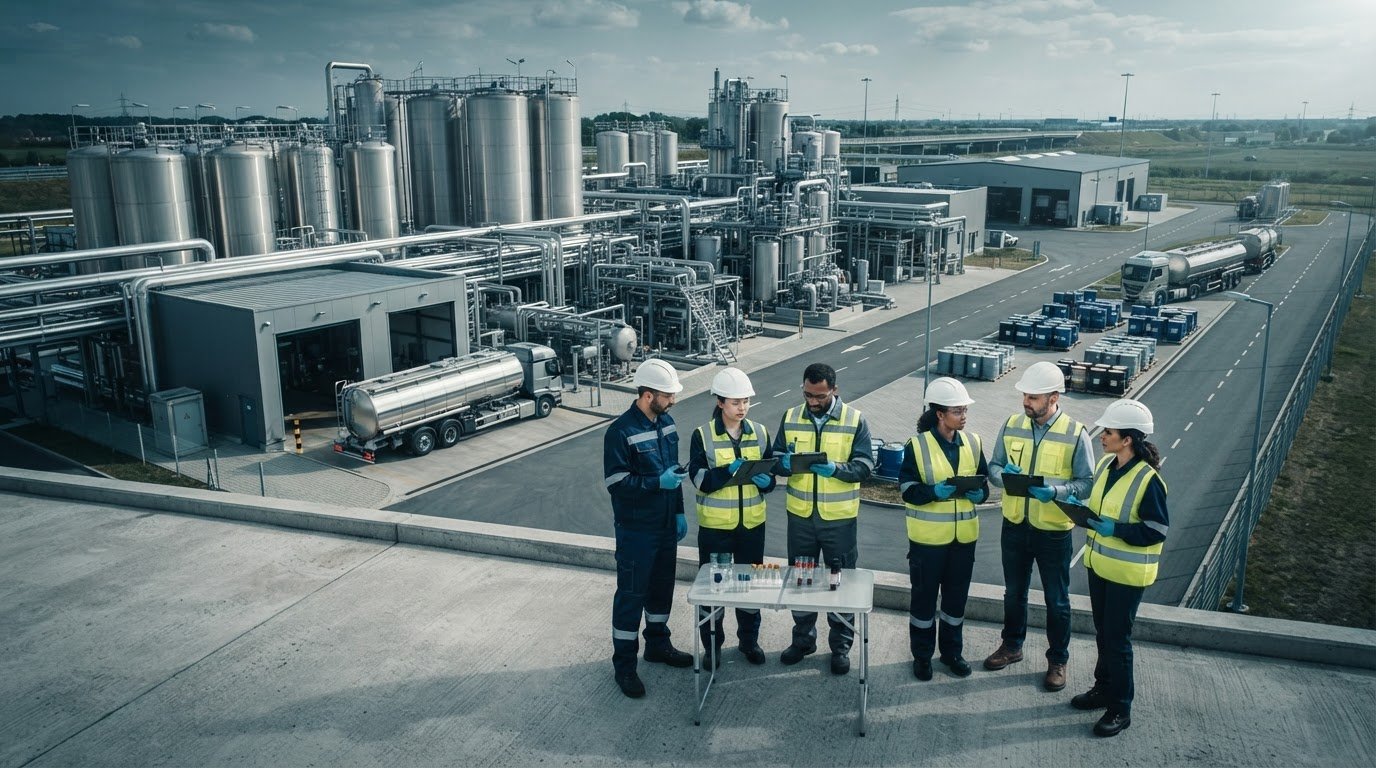
JAS Global Industries serves as a vital pillar of modern industrial infrastructure. We don't just supply chemicals. We provide security. Our expertise in Mining Odor & Gas treatment ensures that global operations remain safe, stable, and productive. We recognize that every mine is a unique ecosystem with its own geological signatures. That's why we leverage our global Research and Innovation (R&I) centers to develop custom chemical formulations. These reagents are engineered to address the specific mineralogical challenges of your site, ensuring that gas neutralization doesn't interfere with your recovery goals. Protecting personnel. Preserving assets. This is our core mission.
Our commitment extends beyond technical specifications. We prioritize sustainability and ethical purpose in every solution we design. We develop cost-effective, eco-friendly reagents that minimize environmental impact without sacrificing industrial performance. This balance of efficiency and ecological responsibility is a hallmark of our corporate identity. Effective H2S control in mining operations requires this level of dedication to both human safety and global resource security. We act as a foundational industry presence, focused on the fundamental needs of a changing world.
Expert Consulting and Process Optimization
Our technical teams act as strategic partners on the ground. We conduct comprehensive on-site audits to identify process inefficiencies and improve overall plant yields. Our experience spans diverse sectors, including specialized H2S reduction strategies for phosphate and potash mining where gas interference can be particularly disruptive. Through our "Global Guardian" philosophy, we elevate industrial solutions into essential contributions to social stability. We protect the people who drive the world's most critical industries by ensuring their work environment remains secure. Our consultants don't just look at the gas; they look at the entire circuit to optimize your total reagent spend.
Partnering for Long-Term Operational Reliability
Reliability is the foundation of our long-term partnerships. We offer bulk chemical supply contracts specifically tailored to industrial-scale needs. Our sophisticated global logistics network ensures that even the most remote mining sites receive steady, reliable support. We don't just deliver products. We provide ongoing technical support and troubleshooting for complex mining circuits. Our experts remain available to assist with system adjustments as ore grades evolve and mining depths increase. For a global consultation on H2S control in mining operations, contact our Dubai headquarters. We stand ready to secure your operation's future and ensure the stability of your mineral recovery process.
Securing the Future of Global Mineral Recovery
The evolution of the mining industry requires a fundamental shift from reactive safety measures to proactive process security. We've explored how transitioning from simple gas detection to active chemical neutralization protects both underground personnel and expensive infrastructure. Effective H2S control in mining operations ensures that toxic risks are managed at the source; preventing the rapid corrosion of steel and the interference with flotation yields that often plague modern circuits.
Success in complex sulfide deposits depends on precision and partnership. Since 1998, JAS Global Industries has operated R&I centers globally to develop specialized formulations for H2S neutralization. Our expert teams conduct on-site technical audits to map your specific generation points and optimize reagent dosing. This commitment to technical excellence and global responsibility provides the stability needed for long-term operational success. It's time to move beyond detection and secure your circuit's integrity.
Optimize your mining operations with JAS Global chemical solutions and ensure your site remains a secure pillar of global resource production. We look forward to building a safer, more efficient mining future with you.
Frequently Asked Questions
What is the most effective chemical for H2S removal in mining?
Triazine-based scavengers are the industry standard for rapid H2S removal due to their exceptionally fast reaction kinetics. For operations with strict nitrogen discharge limits or sensitive downstream flotation chemistry, non-triazine alternatives provide effective neutralization without adding nitrogen-based by-products. The selection depends on your specific water chemistry and whether the treatment occurs in a high-flow pipeline or a stagnant sump.
How does H2S affect the flotation process in mineral recovery?
Dissolved H2S acts as an unintended depressant by coating mineral surfaces with sulfide ions, which prevents collectors from attaching correctly. This interference destabilizes the froth and leads to lower concentrate grades and reduced recovery rates. Proper H2S control in mining operations ensures that reagents like collectors and frothers perform at their designed efficiency levels without chemical interference from dissolved gases.
Can H2S be controlled without affecting the pH of the process water?
Specific liquid scavengers neutralize hydrogen sulfide through direct chemical bonding rather than through pH manipulation. Unlike older methods that rely on caustic shifts to keep sulfide in solution, these modern reagents form stable and irreversible compounds. This allows for effective gas management while maintaining the precise pH balance required for optimal leaching or flotation circuits in complex ore processing.
What are the signs of H2S-induced corrosion on mining equipment?
The primary indicators include localized pitting on steel surfaces and the presence of a characteristic black iron sulfide scale. H2S also causes sulfide stress cracking and hydrogen embrittlement in high-strength steels, which can lead to sudden structural failures in cables or pump shafts. Regular inspections of structural supports and electrical conduits are essential for identifying these early warning signs before they cause equipment failure.
Is chemical H2S treatment more cost-effective than increased ventilation?
Chemical treatment is often more cost-effective because it significantly reduces the massive electrical load required to power high-volume ventilation fans. Diluting gas with air is an energy-intensive process that only addresses the atmosphere. Neutralizing the gas within the process stream allows for lower ventilation rates while still achieving the 1 ppm ACGIH safety threshold recommended for 2026 operations.
How do sulfate-reducing bacteria (SRB) contribute to gas issues in tailings?
Sulfate-reducing bacteria thrive in the anaerobic and stagnant conditions typically found in tailings ponds and thickeners. They metabolize sulfates present in the process water and release H2S as a metabolic byproduct. This biological generation can create dangerous localized gas pockets that pose significant risks during dredging or maintenance operations if the microbial load isn't managed with specialized biocides.
What safety certifications are required for H2S management in 2026?
Operations must adhere to MSHA airborne contaminant regulations, which currently defer to a 10 ppm limit, though most leaders now adopt the 1 ppm ACGIH threshold. Safety managers must ensure that gas detection equipment is calibrated to these modern standards and that personnel receive specific H2S emergency response training. Documentation of regular technical audits is also becoming a standard requirement for ESG reporting.
How can I integrate H2S control into my existing chemicals management plan?
Integration begins with a site-wide technical audit to identify where H2S generation intersects with your existing reagent suite. By coordinating H2S control in mining operations with your water treatment and flotation protocols, you can implement automated dosing that prevents reagent interference. Partnering with a technical consultant ensures that these gas treatment solutions enhance your overall process efficiency and maintain long-term operational stability.