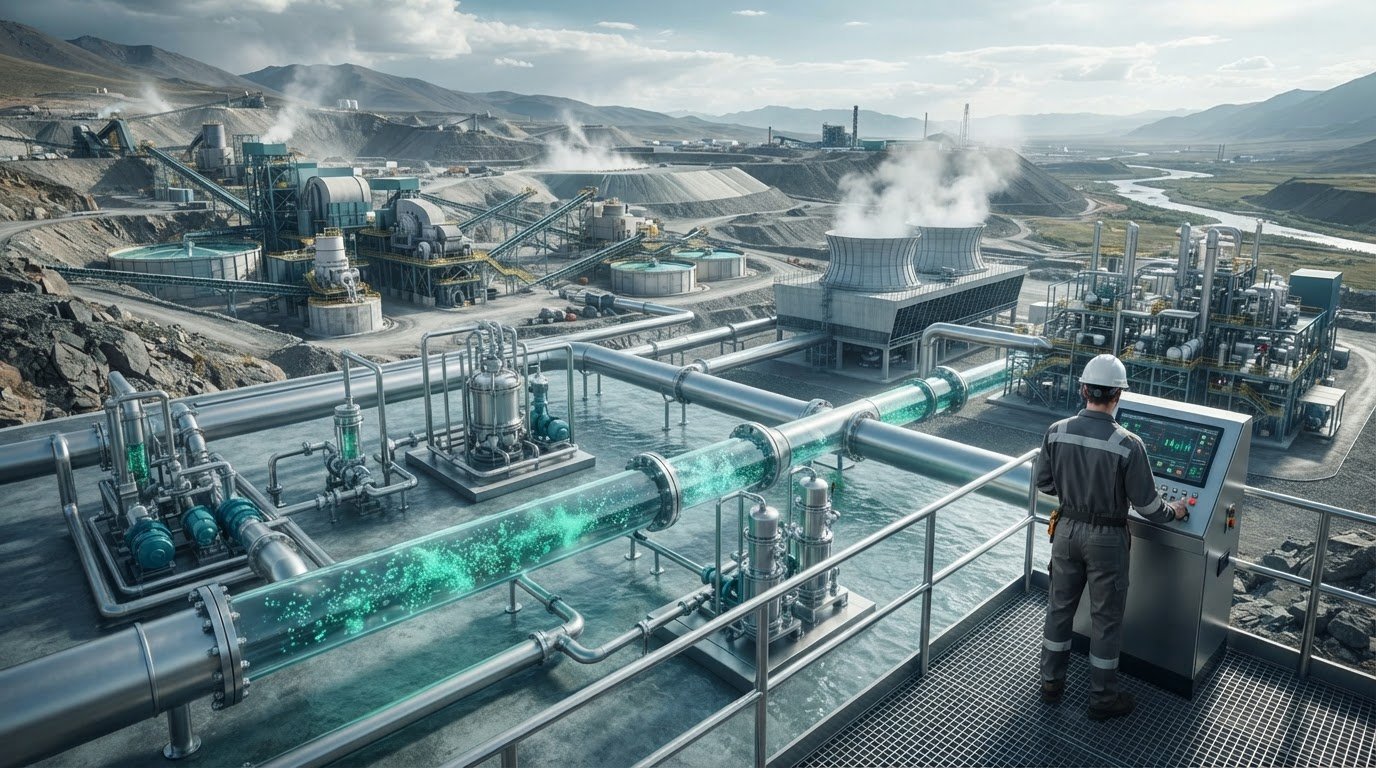


Your industrial infrastructure is the foundation of global resource stability, yet it remains under constant siege from internal corrosion. If you're reacting to pipe failures and rising chemical costs rather than preventing them, your system's security is at risk. Choosing the right chemistry in the debate of filming amines vs neutralizing amines is no longer just a maintenance task; it's a strategic necessity for operational longevity. Most operators recognize the frustration of unscheduled downtime and the "gunk" accumulation that fouls critical systems, especially as raw material costs for amines fluctuate and environmental regulations tighten.
This guide empowers you to master the technical mechanisms of each amine type to ensure your facility remains a reliable pillar of production. We'll examine how to navigate the May 2026 OSHA Hazard Communication Standard updates while optimizing your system for maximum protection. You'll gain a clear framework for selecting the specific chemistry that improves reliability, ensures global compliance, and reduces the total cost of ownership for your water and process systems. We're moving from simple logistics to long term asset security through a hybridized understanding of modern corrosion control.
Key Takeaways
- Understand the fundamental shift from bulk pH adjustment to surface-active barriers to provide comprehensive protection for critical industrial infrastructure.
- Evaluate the economic and technical break-points of filming amines vs neutralizing amines, particularly in systems with high-alkalinity makeup water.
- Ensure compliance with evolving global safety standards, including the 2026 OSHA updates, by selecting amines with superior environmental and handling profiles.
- Discover how specialized amine formulations protect complex processes in the mining and fertilizer sectors, such as flotation circuits and anti-caking applications.
- Transition from standard commodity chemicals to a strategic partnership model that utilizes technical audits and tailor-made solutions for maximum system reliability.
Understanding the Fundamentals: What are Filming and Neutralizing Amines?
Industrial systems are the arteries of modern infrastructure. Maintaining their integrity is a mission-critical task that extends beyond simple maintenance. It's about ensuring the stability of global energy, manufacturing, and resource sectors. Corrosion control is the primary defense in this effort. When technical teams evaluate the choice of filming amines vs neutralizing amines, they're selecting a strategy for long term asset security. This decision doesn't just affect pipe longevity. It impacts operational reliability, energy efficiency, and the safety of the surrounding community.
The fundamental difference lies in how these chemicals interact with the system. Neutralizing amines manage the chemistry of the water itself. Filming amines protect the physical metal surface. Understanding these distinct mechanisms is essential for any professional responsible for the stability of critical industrial assets.
The Chemistry of Neutralization
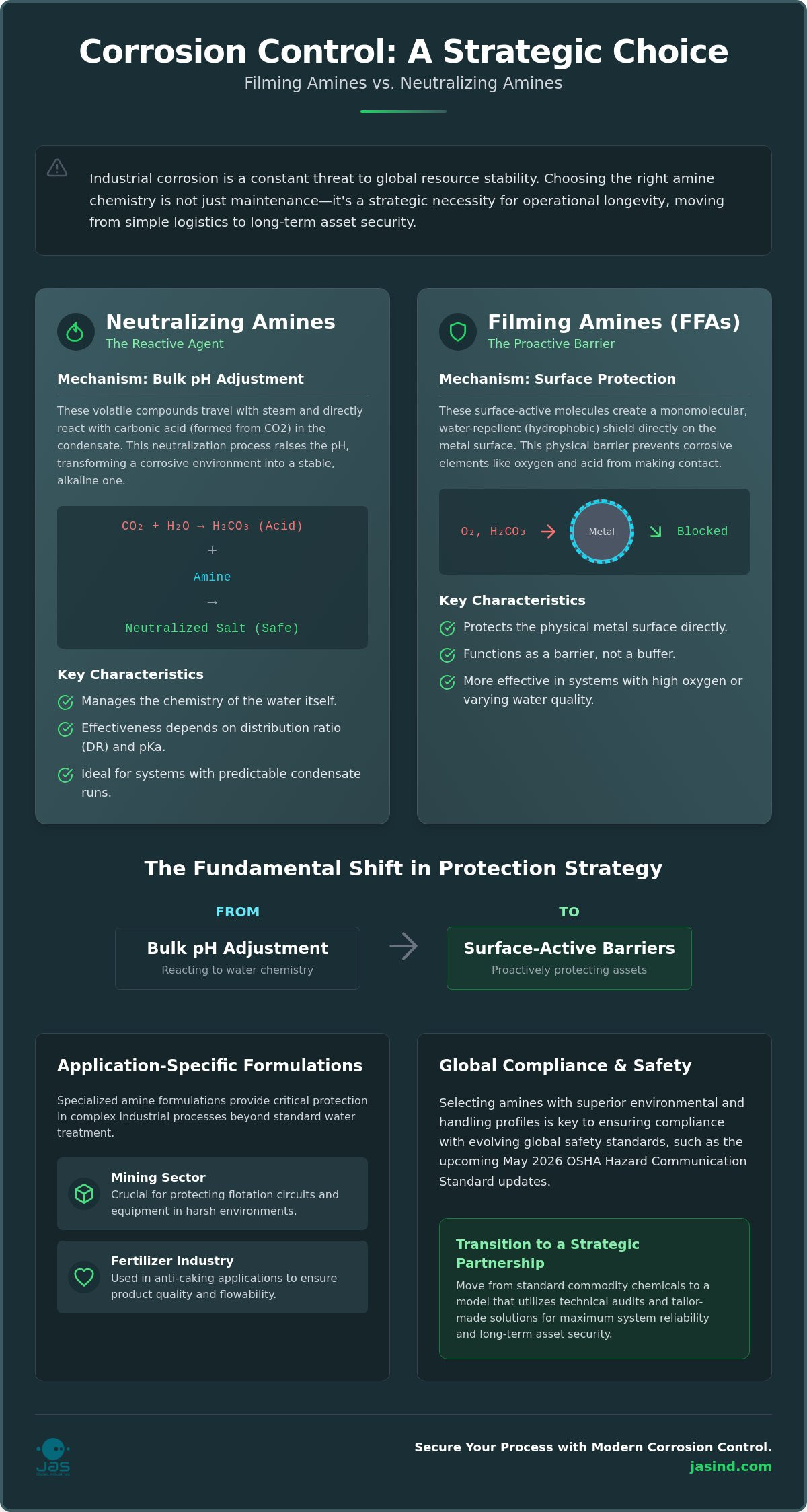
Neutralizing amines are volatile alkaline compounds designed to raise the pH of steam condensate. As steam travels through a system, it often carries carbon dioxide. When this steam cools and condenses, the carbon dioxide dissolves to form carbonic acid. This acid is a primary driver of metal loss in condensate lines. Neutralizing amines migrate with the steam and react directly with this acid to neutralize it. This reaction transforms the corrosive environment into a stable, alkaline one.
The efficiency of this process depends on the dissociation constant, or pKa, of the specific amine used. Common chemical profiles include:
- Morpholine: Known for a low pKa, making it ideal for protecting short condensate runs.
- Cyclohexylamine: Features a high pKa, providing strong neutralization in long, complex systems.
- DEAE (Diethylaminoethanol): Offers a balanced profile for diverse industrial applications.
The Mechanism of Film Formation
Filming amines (FFAs) represent a shift from chemical buffering to physical protection. Instead of reacting with the water, these surface-active molecules create a monomolecular hydrophobic shield on the metal. This barrier prevents corrosive elements like oxygen and carbonic acid from ever reaching the pipe surface. It's a proactive approach to Corrosion inhibitor fundamentals that prioritizes surface security over bulk water treatment.
The structure of an FFA is dualistic. It consists of a nitrogen-based "head" and a long hydrocarbon "tail." The head has a powerful affinity for metal surfaces, allowing it to anchor itself firmly. The tail points outward into the water flow, repelling moisture and creating a dry surface. Because filming amines function as a barrier rather than a buffer, they're often more effective in systems with high oxygen ingress or varying water quality. Understanding the nuances of filming amines vs neutralizing amines allows operators to choose the right guardian for their specific industrial environment.
Deep-Dive Mechanism: How Each Amine Type Protects Industrial Systems
Industrial security requires a granular understanding of chemical movement. The debate of filming amines vs neutralizing amines is essentially a study of chemical distribution across complex phases. Neutralizing amines are reactive agents that seek and neutralize acidic threats within the water. Filming amines are protective barriers that establish a permanent perimeter on the metal itself. Each serves a distinct role in the stability of the system, and their effectiveness depends on the specific physics of your steam-water cycle.
Vapor-Phase vs. Liquid-Phase Protection
Distribution ratios (DR) determine exactly where protection is delivered. A high DR keeps the amine in the vapor phase, while a low DR forces it into the liquid. Neutralizing amines often struggle in sprawling, complex piping networks because their concentration fluctuates as steam condenses at different rates. An Electric Power Research Institute study highlights that selecting amines with specific volatility profiles is the only way to ensure protection reaches the furthest extraction points of a facility.
In high-velocity, two-phase flow environments, neutralizing amines provide a critical advantage. They maintain a consistent pH in the turbulent liquid droplets that can erode metal surfaces. This reactive protection is essential for high-pressure systems where physical films might face mechanical stress. However, filming amines offer a volatility advantage in dry areas of the system, providing a shield where liquid-phase chemicals cannot reach.
Surface Interaction and Metallurgy
Metallurgy dictates the success of your corrosion program. While neutralizing amines support carbon steel through alkalinity, filming amines protect a broader spectrum of materials, including copper alloys and stainless steel. They don't just sit on top of the surface. They penetrate porous iron oxide layers to anchor directly to the base metal. This ensures the protection is foundational rather than superficial.
This penetration creates a "cleaning" effect that serves as both a benefit and a risk. By getting under old scale, filming amines can cause legacy deposits to slough off. A 'gunk ball' is a dense mass of released corrosion products that can obstruct flow or damage pumps if chemical dosing isn't managed with technical precision during the initial application phase. This phenomenon is preventable through gradual dosage increases and rigorous system monitoring.
For systems facing oxygen-induced pitting, filming amines are clearly superior. They provide a physical shield that prevents dissolved oxygen from ever contacting the metal. Implementing advanced water treatment corrosion inhibitors allows operators to move from reactive repairs to proactive asset protection. This transition is vital for the long-term health and stability of global industrial infrastructure.
Performance Comparison: Neutralizing vs. Filming Amines
The economic viability of your corrosion control program often hinges on a single factor: makeup water alkalinity. When evaluating filming amines vs neutralizing amines, the cost-benefit break-point typically occurs when high carbonate levels demand excessive neutralizing dosages. Neutralizing amines require stoichiometric ratios to combat acidity. In contrast, filming amines operate as surface-active agents, requiring significantly lower concentrations to maintain a protective barrier. This efficiency directly impacts the long term ROI of your equipment life-cycle by shifting the focus from bulk chemistry management to targeted surface security.
The Pros and Cons of Neutralization
Neutralizing programs are valued for their operational simplicity. Monitoring is straightforward, relying on standard pH and conductivity measurements to verify protection levels. However, these programs face severe limitations in high-CO2 environments where chemical consumption costs can escalate rapidly. Most critically, neutralizing amines offer no protection against oxygen-pitting corrosion, leaving systems vulnerable during periods of air ingress or feedwater pump failure. They're a reactive measure rather than a proactive shield.
The Pros and Cons of Filming
Filming technologies provide a robust defense regardless of water chemistry fluctuations. They're highly effective at low dosages and offer superior protection during system lay-up, preventing the "yellow water" issues often seen upon restart. The primary challenge is management. If the initial application isn't controlled, the "cleaning" effect can slough off legacy deposits. Understanding condensate system corrosion is vital here; operators must account for the mechanical stability of the film under various flow conditions to avoid fouling downstream components.
Transition and Implementation Strategy
Moving from a neutralizing to a filming program requires a disciplined approach to prevent system fouling. We recommend the "one-third rule." Start by dosing one-third of the target concentration of the filming agent while maintaining full neutralization. Gradually shift the balance over several weeks. This prevents the rapid release of iron oxide and protects strainers from blockages. Modern facilities increasingly adopt a hybridized model, using low levels of neutralizing amines to stabilize pH while relying on filming agents for primary surface protection.
Compliance with global safety standards is a strategic priority for any responsible corporate leader. With the U.S. OSHA updating Hazard Communication Standards to align with GHS Revision 7 by May 19, 2026, choosing amines with favorable environmental profiles is essential. Modern filming amines often exhibit better biodegradability and lower toxicity than traditional neutralizing blends. Success is measured through specific KPIs: iron levels in the return condensate, corrosion coupon weight loss, and total chemical consumption per pound of steam produced. This transition ensures your facility remains a reliable pillar of infrastructure while meeting the highest ethical and regulatory standards. The strategic comparison of filming amines vs neutralizing amines isn't just about chemistry; it's about the security of your entire industrial process.
Application-Specific Guidance: Fertilizer, Mining, and Water Treatment
Amine technology is a pillar of modern infrastructure. Its utility goes far beyond the boiler room. In sectors that sustain life and industry, such as fertilizer production and mining, the choice of filming amines vs neutralizing amines determines the security of global supply chains. While neutralizing agents manage the pH of aqueous environments, filming agents provide the physical barrier necessary to protect assets in some of the world's most aggressive chemical processes. JAS Global Industries integrates these mechanisms into tailor-made formulations that prioritize both performance and environmental responsibility.
Fertilizer Production and Storage
In the fertilizer sector, amines serve as essential stabilizers for finished products. Protecting the integrity of granules is vital for maintaining flowability during global transit. Beyond corrosion control in steam systems, specialized amines function as anti-caking agents. These surface-active molecules modify the surface tension of the fertilizer, creating a hydrophobic coating that prevents moisture absorption and crystal bridging. This application ensures that vital nutrients remain accessible, directly contributing to global food security through chemical stability and resource protection.
Mining and Mineral Recovery
Mining operations face unique challenges in aggressive slurry environments. High-velocity particles and corrosive process waters can quickly degrade capital-intensive equipment. We utilize amines to optimize mining solutions by protecting flotation circuits and grinding aids from premature failure. In these environments, filming amines are often the superior choice. They establish a persistent shield on metal surfaces that resists the mechanical scouring of mineral slurries. This protection extends the life-cycle of flotation cells and piping, ensuring that mineral recovery rates remain high and operational costs stay predictable.
Industrial Water and Desalination
Strategic industrial water treatment requires a balance between corrosion inhibition and process compatibility. In thermal desalination, amines prevent the acidic degradation of heat exchangers. However, in systems utilizing reverse osmosis (RO), operators must exercise caution. Standard filming amines can foul sensitive membranes if not properly managed. We focus on advanced formulations that provide the necessary protection while maintaining membrane flux. Additionally, managing h2s treatment and its corrosive byproducts is essential in many water systems. By understanding the interplay of filming amines vs neutralizing amines, we help facilities secure their water resources without compromising downstream technology.
The stability of your industrial process depends on more than just commodity chemicals. It requires a partner dedicated to the broader human impact of technical solutions. Explore our specialized amine formulations to see how we provide security for your most critical assets.
Securing Your Process: The JAS Global Perspective on Amine Technology
Industrial stability isn't a passive state. It's the result of rigorous technical oversight and strategic chemical application. The ongoing debate of filming amines vs neutralizing amines often centers on technical specifications, but the true differentiator is how these technologies are integrated into your specific process. JAS Global Industries moves beyond the role of a mere supplier. We act as a foundational partner, ensuring that your critical assets are protected against the relentless forces of corrosion. This commitment to resource security is what defines our presence in the world's most vital industries.
Custom Formulations for Complex Challenges
Off-the-shelf chemical solutions often fall short in the face of unique industrial environments. A generic approach to corrosion control ignores the nuances of water quality, system metallurgy, and operational flow. We prioritize site-specific dosing strategies developed within our dedicated R&I centers. By analyzing the micro-level data of your facility, we create tailor-made formulations that address your specific pain points, from unscheduled downtime to high chemical consumption.
Our work in advanced surfactant chemistry has proven that operational reliability is achievable even in the most demanding systems. These specialized formulations go beyond simple pH adjustment. They provide a sophisticated layer of protection that stabilizes the entire industrial process. By choosing a partner who understands the deep mechanics of filming amines vs neutralizing amines, you're investing in the long-term security of your infrastructure.
The Path Forward: Technical Consulting and Partnership
The transition to a more secure chemical management plan begins with a comprehensive technical audit. Our teams don't just deliver products; they provide the expertise necessary to optimize your entire system. During an audit, we evaluate your current corrosion rates, monitoring protocols, and environmental compliance. This macro-to-micro approach ensures that every chemical intervention is purposeful and cost-effective. We focus on building a comprehensive picture of your system's health before recommending a specific amine strategy.
Long-term reliability is maintained through consistent logistics and technical support. Our global offices are positioned to provide specialized solutions wherever your operations are located. We believe that protecting global resources is a shared responsibility. By partnering with us, you gain access to a corporate history rooted in trust and a future focused on sustainability. We invite you to contact our technical departments to begin the process of securing your infrastructure and improving your system's reliability through advanced amine technology.
Securing the Future of Industrial Infrastructure
Industrial security requires a shift from reactive maintenance to strategic protection. The technical choice between filming amines vs neutralizing amines is the cornerstone of this transition. By prioritizing surface-active barriers and precise chemical buffering, you ensure the longevity of infrastructure that supports global resource stability. Reliability isn't a coincidence. It's the result of rigorous technical audits and a commitment to specialized formulations that meet the unique demands of the mining and fertilizer sectors.
JAS Global has been a vital guardian of industrial assets since 1998. Headquartered in Dubai with worldwide service offices and global R&I centers, we provide the expertise needed to secure your process. Our mission is to deliver tailor-made solutions that balance operational efficiency with ethical responsibility. We don't just supply chemicals; we build long-term partnerships that protect the fundamental needs of society. Optimize your industrial process with JAS Global’s specialized chemical formulations.
Your facility is a pillar of modern infrastructure. Let's work together to ensure it remains stable, compliant, and efficient for decades to come.
Frequently Asked Questions
What is the primary difference between filming and neutralizing amines?
Neutralizing amines function by reacting with acidic contaminants to raise the pH of the water. Filming amines establish a microscopic hydrophobic barrier directly on the metal surface. This fundamental distinction defines the strategy of filming amines vs neutralizing amines; one manages the chemistry of the water while the other provides a physical shield for the infrastructure.
Can I use both filming and neutralizing amines in the same system?
Yes, many modern industrial facilities utilize a hybridized treatment program to maximize protection. This approach combines the pH-stabilizing benefits of neutralizing amines with the robust surface security of filming agents. Using both ensures protection against both acidic corrosion and oxygen pitting while optimizing total chemical consumption costs.
Are filming amines safe for use in food-grade fertilizer production?
Safety depends on the specific amine formulation and its compliance with international standards. In sectors like fertilizer production where product purity is paramount, operators should select amines verified for use in systems where steam might contact food-related products. Always verify compliance with regulations like 21 CFR 173.310 to ensure the security of the global food supply chain.
How do I monitor the effectiveness of a filming amine program?
Monitoring relies on measuring dissolved iron levels in the condensate and using corrosion coupons for long-term data. A simple "bead test" can also verify the presence of a hydrophobic film by observing how water droplets behave on treated metal surfaces. These metrics provide a clear picture of system reliability and the efficiency of the protective barrier.
Will filming amines cause my system filters to clog?
Filters only clog if filming amines are introduced too quickly into a system with existing corrosion deposits. This "cleaning effect" sloughs off legacy scale, which can accumulate in strainers. Using a gradual dosage strategy prevents blockages and ensures a stable transition to a filming program without compromising flow stability.
Which amine type is better for protecting a system during a long-term shutdown?
Filming amines are superior for protecting systems during long-term shutdowns or lay-ups. Because they establish a persistent physical barrier, they prevent atmospheric oxygen from reaching the metal even when the system is offline. This proactive shield eliminates the "yellow water" issues often encountered during facility restarts after a period of inactivity.
How do amines impact the environmental footprint of a water treatment plant?
Modern amine technology focuses on reducing environmental impact through improved biodegradability and lower toxicity. Selecting formulations that align with the May 2026 OSHA Hazard Communication Standard updates ensures your facility meets global safety requirements. Efficient amine use also reduces energy consumption by maintaining optimal heat transfer surfaces across the entire system.
Can neutralizing amines handle oxygen-rich industrial environments?
Neutralizing amines cannot protect against oxygen-induced corrosion. They are designed specifically to neutralize carbonic acid and raise pH levels. In environments where oxygen ingress is a concern, filming amines are necessary to provide the physical barrier required to prevent pitting and metal loss, ensuring the long-term stability of the asset.