
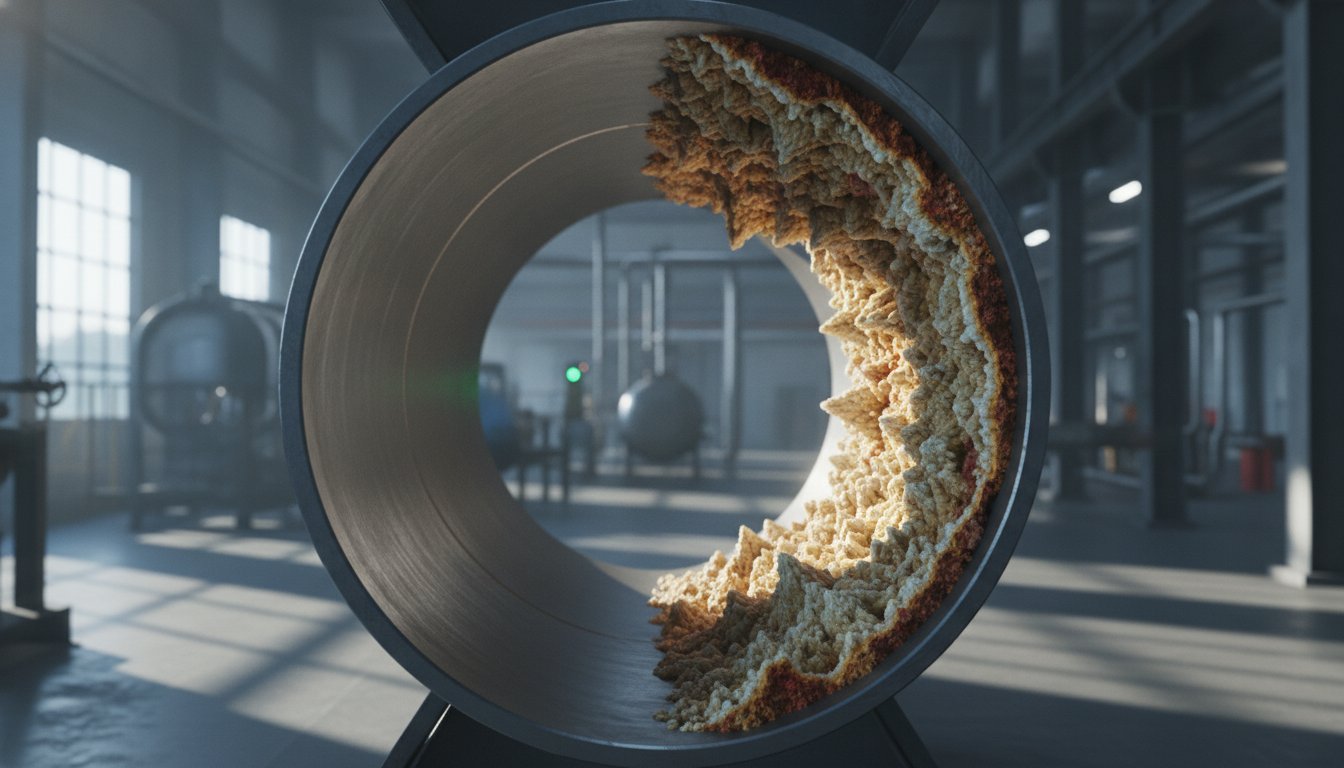
Is your facility's operational budget being consumed by an invisible, rock-hard predator? Industrial scale is not just a maintenance nuisance; it's a complex chemical precipitation that threatens the stability of global infrastructure. Failing to identify the specific common types of industrial water scale in your system leads to more than just inefficiency. It causes unplanned downtime. It triggers equipment failure. It disrupts the essential resources our society depends on every day.
We understand the frustration of seeing energy costs rise while heat transfer efficiency drops, especially when chemical treatments don't produce guaranteed results. This guide provides the technical expertise you need to identify the exact chemical compositions of scale and learn how to protect your infrastructure from efficiency loss and structural damage. We'll explore the characteristics of various deposits and outline the optimized chemical dosing strategies required for long-term protection, ensuring your operations remain a reliable pillar of industry.
Key Takeaways
- Master the science of mineral precipitation to anticipate how supersaturation levels threaten your system's operational stability.
- Gain the technical expertise to identify the common types of industrial water scale, allowing for targeted interventions against specific chemical compositions.
- Assess the true economic impact of scaling, including how thin layers of mineral deposits can drive up energy costs and pumping requirements.
- Implement strategic prevention methods such as antiscalants and threshold inhibitors to safeguard infrastructure from long-term structural damage.
- Shift from generic treatments to precision chemistry with site-specific solutions designed for diverse water profiles and global resource security.
Understanding Mineral Precipitation: The Science of Industrial Scale
Industrial scale is not a random occurrence. It's the precise result of mineral salts precipitating from water. This transition happens when the water chemistry reaches a tipping point. To master the science of industrial scale, engineers must monitor the concentration of dissolved ions. When minerals like calcium and magnesium exceed their solubility limits, they transform from a stable liquid state into solid crystalline deposits. These deposits threaten the security and stability of critical infrastructure.
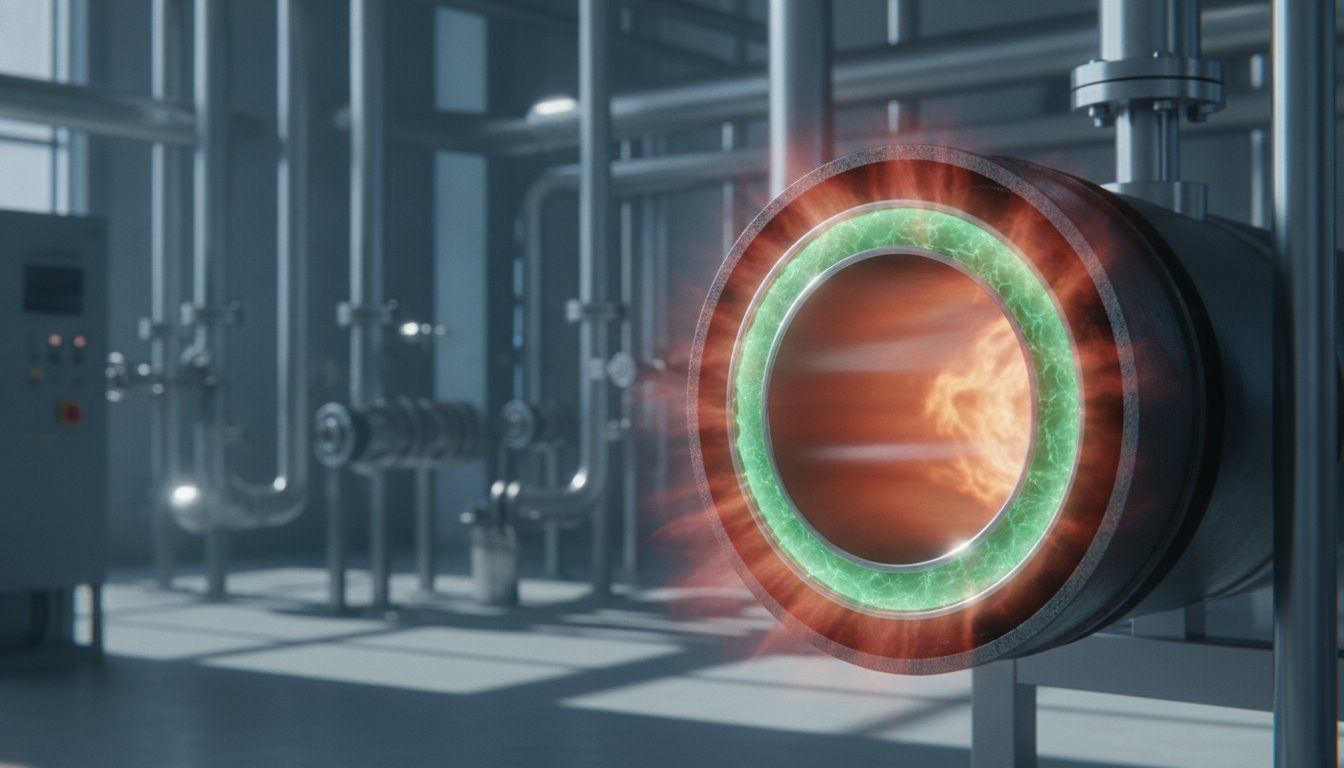
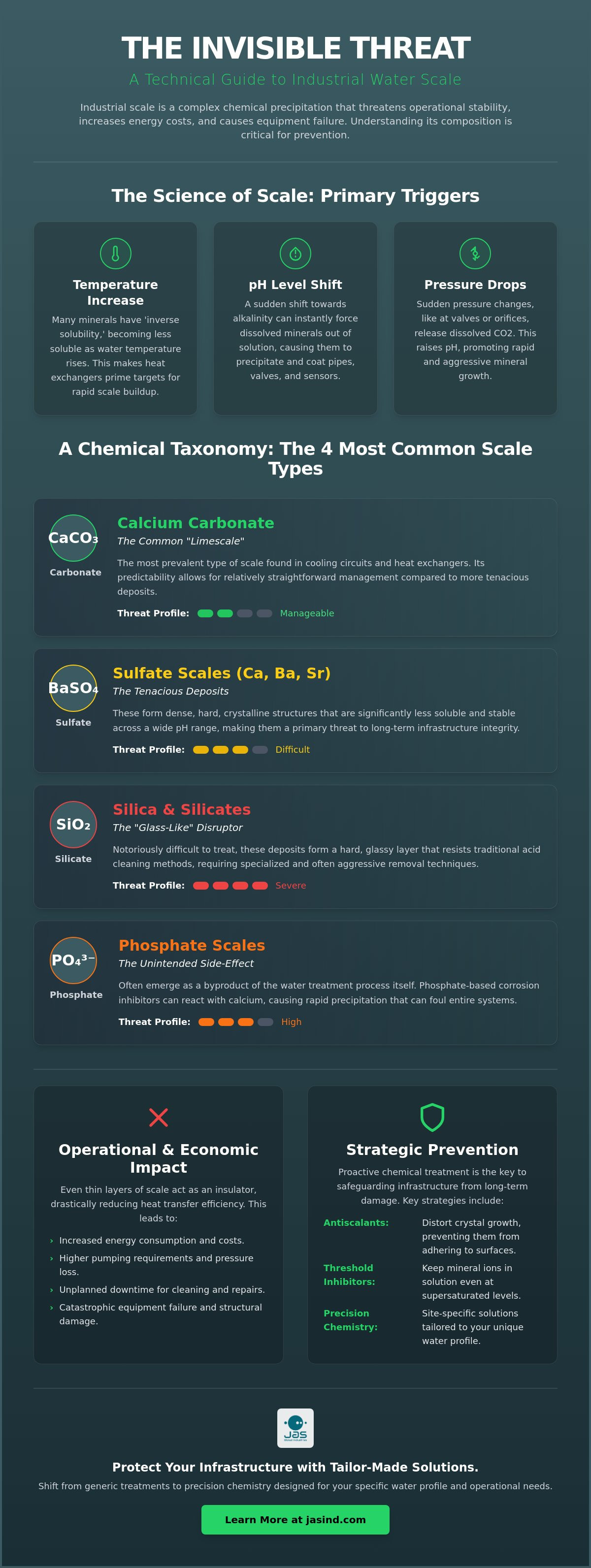
Temperature functions as a primary thermodynamic trigger. In cooling systems, heat transfer surfaces often see the first signs of mineral buildup. Many minerals exhibit inverse solubility, meaning they become less soluble as water temperature increases. This is why scale prioritizes heat exchangers. Kinetic factors further complicate this process. While high flow velocity can sometimes mitigate deposition, surface roughness provides the necessary nucleation sites for adhesion. Identifying the common types of industrial water scale starts with a rigorous analysis of these physical and chemical variables.
The Role of Solubility Limits
The Solubility Product Constant (Ksp) represents the mathematical threshold for mineral precipitation. If the product of the concentrations of dissolved ions exceeds this constant, scale formation becomes inevitable. pH levels serve as an immediate chemical trigger. A sudden shift in alkalinity can instantly force minerals out of solution, coating pipes and sensors. In high-pressure boiler systems, supersaturation occurs when the mineral concentration exceeds the equilibrium solubility limit due to rapid temperature or pressure changes, creating an unstable environment where solids crash out of the water phase.
Environmental Triggers in Industrial Systems
Mechanical fluctuations within a system act as frequent catalysts for scale. Sudden pressure drops at valves or orifices can release dissolved carbon dioxide. This gas release shifts the chemical equilibrium and raises the pH, promoting rapid mineral growth. In cooling towers, evaporation cycles naturally concentrate dissolved solids. Without precise monitoring, the water chemistry quickly reaches a critical saturation point. Residence time remains a vital kinetic factor. The longer water remains in stagnant zones, the more time crystal lattices have to organize and bond to metal surfaces. Managing the common types of industrial water scale requires a proactive approach to these environmental stressors to ensure long-term equipment reliability.
A Chemical Taxonomy: The 4 Most Common Types of Industrial Water Scale
Identifying the common types of industrial water scale requires more than a visual inspection; it demands a molecular understanding of the water's mineral profile. Most industrial facilities struggle with Calcium Carbonate (CaCO3). It's the most prevalent "limescale" found in heat exchangers and cooling circuits. While common, its predictability allows for relatively straightforward management compared to more tenacious deposits. Sulfate scales, including Calcium, Barium, and Strontium sulfates, present a far greater challenge. These minerals form dense, crystalline structures that are significantly less soluble than carbonates, making them a primary threat to long-term infrastructure integrity.
Beyond simple minerals, more complex compounds like silica and silicates act as silent disruptors. These "glass-like" deposits are notoriously difficult to treat because they resist traditional acid cleaning methods. Phosphate-based scales also emerge as a significant concern, often as a side effect of the treatment process itself. When phosphate-based corrosion inhibitors react with high levels of calcium, the resulting precipitation can foul entire systems within days. Understanding these specific chemical signatures is the first step toward achieving total process security and operational reliability.
Carbonate vs. Sulfate Scales
Calcium carbonate is highly sensitive to pH changes. A slight increase in alkalinity often triggers its rapid precipitation. In contrast, sulfate scales are remarkably stable across a wide pH range. This stability makes Barium Sulfate (Barite) extremely difficult to remove once it's bonded to a surface. While carbonates can often be dissolved with standard acid cleaning, sulfates frequently require aggressive mechanical intervention or specialized chemical chelants. Understanding these differences is critical when evaluating the operational and economic impact of scaling on your high-pressure systems.
The Complexity of Silicates and Phosphates
Silica and silicates represent some of the most frustrating common types of industrial water scale. Magnesium silicate often forms in high-alkalinity environments, creating a hard insulation layer that destroys thermal efficiency. Because of its unique polymeric structure, silica scale requires specialized Water Treatment Antiscalants to prevent the formation of these resilient bonds. Calcium phosphate scale is equally problematic, as it can quickly disrupt cooling water treatment programs by forming a fine, tenacious sludge. This sludge restricts flow and promotes under-deposit corrosion. For facilities seeking to optimize their chemical dosing, exploring precision water treatment solutions is a necessary step toward protecting global resources and ensuring system stability.
Operational and Economic Impact of Scaling on Infrastructure
Scale is a silent tax on industrial efficiency. It compromises the stability of global resource management by siphoning energy and degrading physical assets. Neglecting the common types of industrial water scale within a system leads to a cascade of operational failures. Thermal resistance is the most immediate consequence. A scale layer as thin as 1mm can increase energy consumption by 10% in heat transfer equipment. This isn't just a financial burden; it's a direct blow to sustainability goals and carbon footprint targets. As mineral deposits thicken, they narrow pipe diameters. This flow restriction forces pumps to work harder, accelerating mechanical wear and driving up electrical demand.
Under-deposit corrosion creates a secondary, often hidden, threat. Scale is rarely uniform. It creates microscopic voids that trap corrosive agents or support microbial growth. This localized pitting can compromise a pressure vessel's integrity long before the scale itself causes a blockage. For critical infrastructure like boilers, RO membranes, and high-speed turbines, this degradation is a path to premature replacement and massive capital expenditure. Protecting these assets requires a move away from reactive maintenance toward a philosophy of total system security.
Heat Transfer Degradation
Engineers use the "fouling factor" to account for these inefficiencies during the design phase. However, real-world conditions often exceed these safety margins. As scale thickness grows, thermal conductivity drops exponentially. In mining grinding circuits, where massive amounts of energy are converted into mechanical work, even minor scaling on cooling jackets can lead to overheating and unplanned stops. This thermal barrier prevents the system from reaching its design capacity, forcing facilities to operate at a fraction of their potential efficiency.
Maintenance and Replacement Costs
Maintenance strategies often rely on "acid washing" to restore performance. While effective, this process carries a high risk to metal integrity. Repeated chemical cleanings thin the base metal, shortening the equipment's lifespan. Production losses during these shutdowns often dwarf the cost of the chemicals themselves. Utilizing advanced mining solutions and targeted antiscalants provides a protective barrier for high-value assets. Preventing the common types of industrial water scale from bonding in the first place is the only way to ensure long-term resource security and operational reliability.
Strategic Prevention: Threshold Inhibitors and Antiscalants
Preventing the common types of industrial water scale requires a shift from reactive cleaning to molecular prevention. We don't just treat symptoms; we manage the fundamental chemistry of the water. Strategic prevention relies on four primary mechanisms: threshold inhibition, crystal growth modification, dispersion, and sequestration. Each method plays a vital role in maintaining the stability of critical infrastructure. By intervening at the nucleation stage, these chemical solutions ensure that minerals remain in a manageable state rather than bonding to expensive equipment surfaces.
Threshold inhibition allows systems to operate well beyond the theoretical solubility limits of mineral salts. Crystal growth modification distorts the developing mineral lattice, preventing the formation of the dense, interlocking structures characteristic of sulfate and carbonate scales. Dispersion keeps any precipitated micro-particles suspended in the water flow, preventing them from settling in low-velocity areas. Finally, sequestration involves chelating scale-forming ions, effectively "masking" them so they cannot participate in precipitation reactions. Together, these strategies provide a comprehensive shield against efficiency loss and structural damage.
The Mechanism of Threshold Inhibition
Threshold inhibitors are remarkable for their efficiency. They work at sub-stoichiometric levels, meaning a very small amount of chemical can prevent the precipitation of a much larger mass of mineral. This process is central to modern surfactant chemistry, where specialized phosphonates and polymers interact with mineral ions. These molecules function by adsorbing onto the active growth sites of embryonic crystals. Essentially, the inhibitor molecules provide a molecular "blocking" of crystal growth sites that halts the expansion of the mineral lattice before it can become a visible deposit. This precision intervention preserves the integrity of high-pressure systems and cooling circuits alike.
Selecting the Right Scale Inhibitor
Effective protection starts with an accurate mineral profile. An antiscalant designed for a reverse osmosis (RO) system must address different stressors than a treatment for a high-temperature boiler. Success depends on synergistic formulations that account for complex water matrices, including varying pH levels and the presence of dissolved metals. Dosing accuracy is paramount. Even minor fluctuations in chemical concentration can leave a system vulnerable to the common types of industrial water scale. Constant monitoring of system health ensures that the chemical dosing strategy evolves alongside the water chemistry. For facilities committed to long-term infrastructure security, exploring advanced water treatment inhibitors is the most reliable path to operational stability and resource protection.
JAS Global Industries: Tailor-Made Solutions for Industrial Water Security
JAS Global Industries views scale management as a vital pillar of global resource stability. We move beyond the supply of commodity chemicals, focusing instead on precision process optimization. Our global Research and Innovation (R&I) centers develop site-specific formulations tailored to diverse water profiles. This approach is essential because the common types of industrial water scale vary significantly by geography and industry. By identifying the specific mineral stressors at each site, we provide the protection required to maintain critical infrastructure and ensure long-term operational reliability.
Technical auditing serves as the foundation of our partnership. JAS Global Industries identifies the root cause of scaling through rigorous on-site testing rather than simply treating the symptoms. This analysis is a core component of sustainable industrial water treatment. By securing system integrity, we contribute to global resource security and help facilities meet increasingly strict environmental mandates. We act as a guardian of your assets, transforming chemical management into a strategic advantage.
Specialized Formulations for Mining and Fertilizers
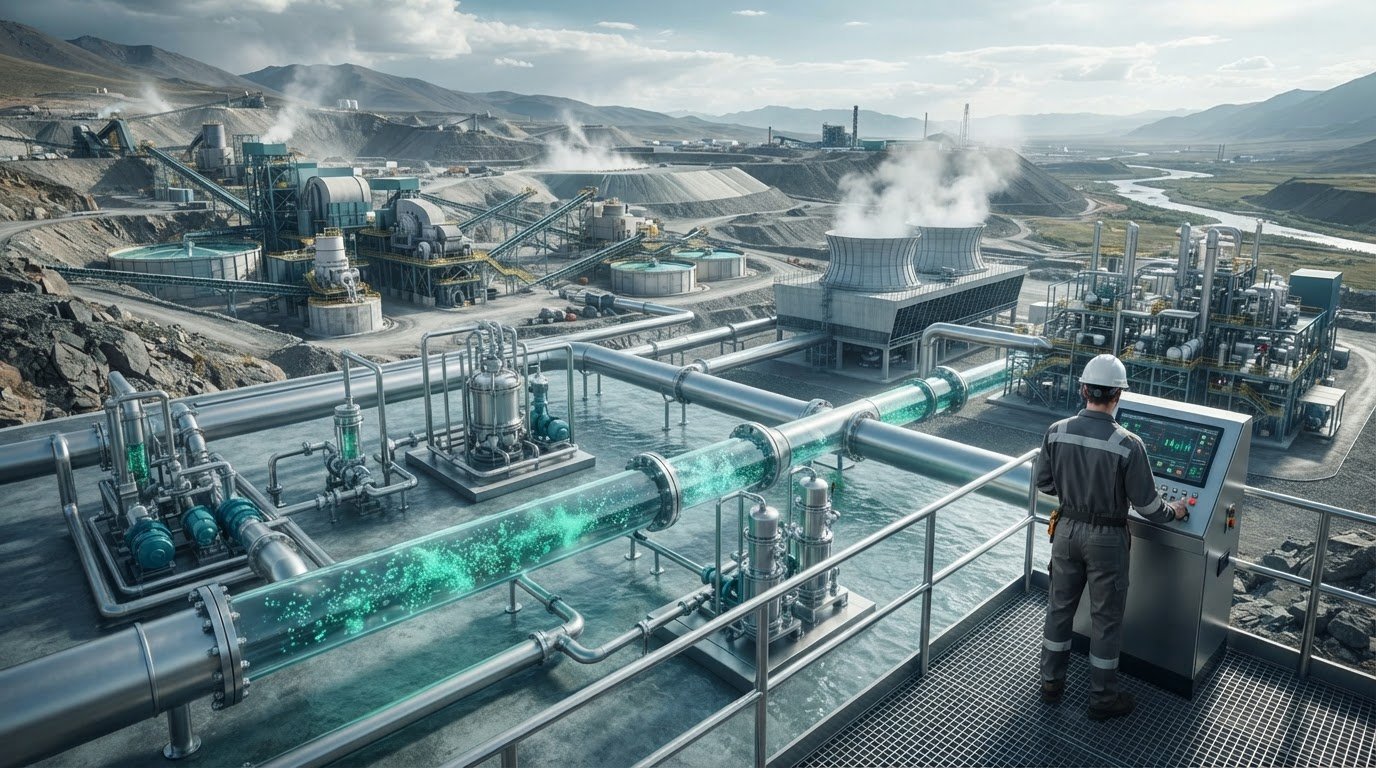
Phosphoric acid production presents some of the most aggressive scaling environments in the world. JAS Global Industries develops specialized Water Treatment Scale Inhibitors specifically for these heavy mineral processing applications. Our formulations are engineered to withstand extreme pH levels and high mineral concentrations. In the Middle East, we play a critical role in protecting desalination infrastructure. Given the region's reliance on these systems, preventing the common types of industrial water scale in thermal and reverse osmosis plants is not just a maintenance task; it's a matter of regional water security.
Commitment to Operational Reliability
Stability requires a partner with a robust global supply chain. JAS Global Industries ensures consistent chemical availability, even in remote mining locations or complex industrial zones. Our professional technical consulting extends beyond initial dosing; we provide ongoing support for long-term plant stability. This commitment to reliability ensures that your infrastructure remains an indispensable pillar of modern industry. Contact JAS Global Industries for a comprehensive water system audit. We'll work with you to identify risks and implement a precision strategy for long-term protection and efficiency.
Securing the Future of Global Industrial Infrastructure
Effective scale management is a prerequisite for operational stability. By moving beyond reactive cleaning and mastering the identification of common types of industrial water scale, facilities protect high-value assets from irreversible degradation. We have explored how molecular interventions, such as threshold inhibition and crystal growth modification, prevent mineral precipitation before it compromises thermal efficiency or structural integrity. This transition from commodity chemicals to precision chemistry is essential for any facility aiming to reduce energy costs and eliminate unplanned downtime.
JAS Global Industries has been at the forefront of this mission since 1998. Our global R&I centers develop specialized formulations for the unique challenges of the mining and fertilizer sectors. We don't rely on guesswork. Our team provides on-site technical auditing and rigorous laboratory testing to ensure your strategy is built on data, not assumptions. Consult with our technical experts for a custom water treatment strategy to ensure your operations remain a reliable pillar of global industry. Safeguarding your infrastructure today ensures a more stable and sustainable resource lifecycle for the future.
Frequently Asked Questions
What is the most common type of industrial water scale?
Calcium carbonate is the most prevalent form of mineral deposit across global industrial systems. It's frequently called "limescale" and appears in heat exchangers, cooling towers, and boilers where hard water is present. This scale forms when dissolved calcium ions react with carbonate alkalinity, creating a hard, crystalline structure that bonds to metal surfaces. Understanding this mineral's behavior is the first step toward securing your facility's long-term operational health and energy stability.
How does scale formation affect the energy efficiency of boilers?
Scale functions as a thermal insulator that restricts heat transfer from the fire side to the water side. This thermal resistance forces the system to burn more fuel to maintain steam production, leading to a significant increase in energy consumption. This inefficiency doesn't just raise costs; it also risks overheating the boiler tubes. Such thermal stress leads to potential structural failure and unplanned downtime, compromising the stability of your essential infrastructure.
Can scale be prevented without using harsh acids?
Proactive chemical treatment allows facilities to prevent scale without resorting to aggressive acid washes. By utilizing specialized common types of industrial water scale inhibitors, you can interfere with the mineral precipitation process at the molecular level. These treatments keep minerals in a soluble or dispersed state, ensuring that surfaces remain clean. This protective approach means the base metal stays secure from the damage often caused by corrosive cleaning agents.
What is the difference between an antiscalant and a scale inhibitor?
The terms are often used interchangeably, but they serve specific roles in process security. Antiscalants are typically specialized formulations used in reverse osmosis systems to prevent membrane fouling under high pressure and concentration. Scale inhibitors represent a broader category of chemicals designed for cooling towers and boilers. Both utilize threshold inhibition and crystal growth modification to maintain operational stability and protect high-value assets from mineral deposits.
Why is silica scale considered the most difficult to remove?
Silica scale forms a dense, glass-like polymeric structure that is nearly impervious to standard acid cleaning. Unlike carbonate deposits, silica doesn't react with common descaling chemicals, making mechanical removal or specialized hydrofluoric acid treatments necessary. Because these removal methods are risky and expensive, preventing silica through precision antiscalants is the only reliable way to protect your system. Failure to manage silica can lead to permanent equipment degradation.
How do temperature changes trigger mineral precipitation in cooling towers?
Most scale-forming minerals exhibit inverse solubility, meaning they become less soluble as the water temperature rises. In a cooling tower, the hottest point is usually the heat transfer surface within the exchanger. As water contacts these hot metal tubes, the minerals crash out of the solution and bond directly to the surface. This creates an insulating barrier that destroys system efficiency and forces the entire cooling circuit to work harder to maintain design parameters.
What role does pH play in the formation of calcium carbonate scale?
A higher pH level increases the concentration of carbonate ions in the water, which directly accelerates the precipitation of calcium carbonate. When the pH shifts toward alkalinity, the chemical equilibrium is disrupted, and the water reaches its saturation point more quickly. Managing pH is a fundamental step in controlling the common types of industrial water scale that threaten system reliability. Stable pH levels ensure that minerals remain in solution rather than depositing on surfaces.
How can I identify which type of scale is in my industrial system?
Accurate identification requires professional laboratory analysis, such as X-ray diffraction (XRD) or Scanning Electron Microscopy (SEM). While a visual inspection can provide clues, only a chemical audit can confirm the exact mineral composition. JAS Global Industries provides on-site technical auditing and laboratory testing to identify the specific root cause of your scaling challenges. This data-driven approach allows us to develop a tailored protection strategy that ensures long-term plant stability and resource security.